

What We Buy Back: DDR4/DDR5 Server DIMMs
Equipment HQ buys enterprise DDR4 and DDR5 server memory in bulk. We accept ECC UDIMM, RDIMM and LRDIMM modules. Common capacities: 8, 16, 32, 64, 128 and 256 GB. Typical speeds: DDR4‑2133 to DDR4‑3200, and DDR5‑4800 to DDR5‑5600. We handle mixed OEM labels and FRUs from HPE, Dell and Lenovo, as well as retail equivalents.
For rapid pricing, send lots of 50+ units; we can also assess small pilot lots ahead of large rollouts. Mixed brands and speeds are fine. We exclude items that are physically broken, burnt or counterfeit. For buyback benefits, see why you should sell your old business IT hardware, and for full lifecycle support view our ITAD services for businesses.
How Capacity, Speed, ECC Type and Rank Affect Price
Price is driven by capacity, speed and generation. Higher densities and newer speed bands usually command more. DDR5 often carries a premium over DDR4 due to demand and platform refresh cycles. ECC is error‑correcting code; RDIMM adds a register for stability; LRDIMM reduces electrical load to support higher densities.
Rank count (1R/2R/4R, and 8R on some LRDIMM) and IC organisation (x4 vs x8) affect compatibility and therefore resale demand. For example, a 64 GB DDR5‑4800 RDIMM will usually price above a 32 GB DDR4‑2666 RDIMM in similar condition. For platform notes and QVL checks, see server maintenance: what to know and where to start.
Other Value Drivers: Condition, Matched Sets, Brands and Date Codes
Clean, working modules with intact labels, straight PCBs and undamaged heat spreaders grade higher. Readable, unlocked SPD data speeds testing and resale. Matched kits and consistent date codes help buyers deploy in sets and reduce returns.
OEM‑labelled FRUs (HPE, Dell, Lenovo) sell well when part numbers match fleet standards; generic retail parts also move quickly if date codes are recent. Value drops with corrosion, bent contacts, missing labels or SPD lock issues. Items beyond reuse are handled under IT hardware disposal options explained.
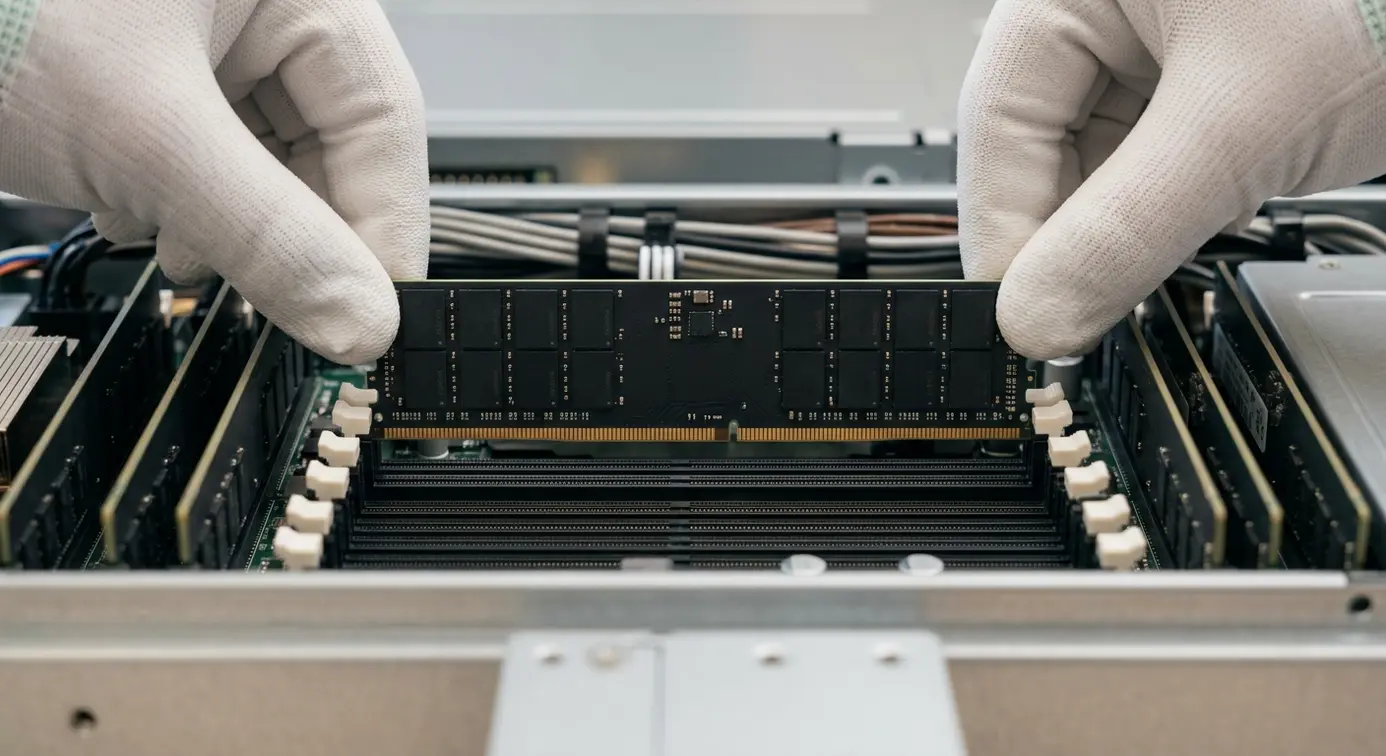
This image was generated with AI and may not always represent the product or service exactly.
Our Engineering Test and Grading Workflow
Intake starts with booking, serial capture and ESD‑safe handling. We audit and visually inspect under magnification, noting label condition, date codes and any physical defects. SPD is read and verified against the label.
Modules are tested in vendor platforms across multiple slots and channels. We run multi‑pass diagnostics with varied data patterns at rated timings and voltages, followed by burn‑in to surface intermittent faults.
We grade A/B/C or salvage. A = fully working, clean labels, recent date codes. B = working with minor wear. C = working but heavy wear or mixed labels. Salvage = no function or parts‑only. Test reports are available on request. For our refurb standards, see should I buy refurbished IT hardware.
Compliance, Chain of Custody and Environmental Reporting
We operate a controlled chain of custody from collection to lab, with sign‑off at each transfer. DIMMs are non‑data‑bearing, but any associated assets follow strict, documented processes aligned with UK GDPR. Read more in our GDPR compliance overview.
Failed modules are treated as e‑waste and routed to certified WEEE recyclers. We provide mass‑balance reporting and certificates of disposal on request. See the environmental impact of IT waste and how ITAD can help for why this matters.
Quote to Cash: Pricing Model and Rapid Payout
For a fast quote, share part numbers, capacities, speeds, rank info and quantities. SPD screenshots help. Clear photos of labels and trays reduce queries. Include your pickup postcode and any site access notes.
- Part numbers and OEM FRUs
- Capacity, speed, rank (x4/x8 if known)
- Quantities by line item
- Photos of labels and packing
- Pickup postcode and site contact
Our SLA: same‑day indicative pricing, UK collection in 24–72 hours, and payment on grade via same‑day bank transfer. We issue remittance advice with lot‑level reconciliation. Choose a spot buy or a consignment structure depending on your goals.
Bulk Recovery and On‑Site Memory Extraction
For large decommissions, we plan the project with a site survey and risk assessment. We schedule de‑racking to protect uptime and can work out of hours.
On site we remove DIMMs with ESD control, count and pack into labelled trays, and palletise for secure transport. Loads travel insured, with tracking and arrival confirmation. Optional on‑site verification tests are available.
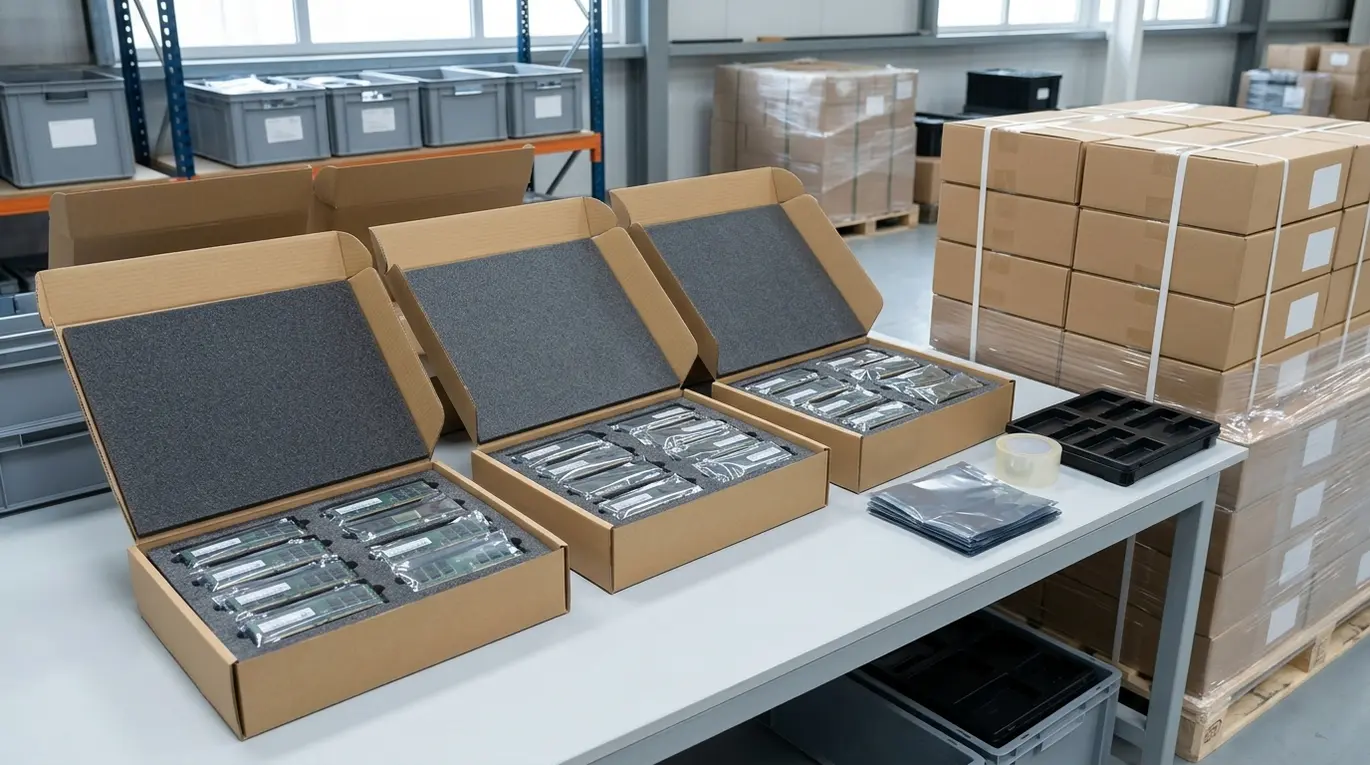
This image was generated with AI and may not always represent the product or service exactly.
How to Prepare and Pack DIMMs Safely
Good packing prevents damage and speeds testing. Use ESD‑safe bags or clamshell trays. Cushion with antistatic bubble or foam. Never stack bare modules or allow contacts to rub.
- Pair or tray modules in ESD‑safe packaging
- Use foam or antistatic bubble wrap around trays
- Keep labels facing up and visible
- Fill voids to stop movement in transit
- Seal cartons and mark box counts
Create a simple inventory with PN, capacity, speed, rank, quantity and noted defects. We can supply a template and pre‑labelled cartons on request.
Sample Valuation Scenarios (Guidance Only)
These examples show relative trends, not offers:
- DDR4 16 GB 2400 RDIMM typically values below a 32 GB 3200 RDIMM.
- DDR5 64 GB 4800 RDIMM usually prices below a 128 GB DDR5 LRDIMM of the same date range.
- Matched kits with clean, recent date codes lift value and reduce time to sale.
- Mixed lots, torn labels or SPD lock can reduce value.
Markets move with supply and platform demand, so request a current quote for accurate pricing.
Why Choose Equipment HQ for Memory Buyback
Choose Equipment HQ for hands‑on engineering and reliable operations. Our team tests on multi‑vendor platforms with calibrated methods and clear reporting. We offer UK‑wide collection, transparent grading and traceable recycling.
We move fast, communicate clearly and pay on time. Beyond buyback, we support the full lifecycle: audit, de‑install, refurbish, warranty downstream stock and recycle what cannot be reused.
Next Steps: Request Your Buyback Quote
Ready to price your memory? Send part numbers, photos, quantities and your pickup postcode for a same‑day indicative offer. Tell us if you need an NDA or a purchase order process.
Book a site survey if you have a live estate to de‑rack. You can combine memory buyback with wider decommission and recycling to cut costs and downtime.
FAQs
Do you buy consumer RAM or SO‑DIMMs?
We focus on enterprise server DIMMs. We buy ECC UDIMM, RDIMM and LRDIMM. Non‑ECC desktop RAM and laptop SO‑DIMMs are generally excluded.
Can you price mixed brands, speeds and date codes?
Yes. Send clear part numbers, SPD screenshots and quantities. Matched sets usually achieve higher values and sell faster.
How do you handle SPD‑locked or vendor‑specific modules?
We test and validate SPD. Some vendor locks limit reuse in certain platforms, which can affect price. We advise case by case.
What happens if some modules fail testing?
We pay on grade. Failed items are classed as salvage and routed to certified WEEE recycling. We can share test evidence on request.
Can you supply packing materials?
Yes. We can provide ESD trays, bags and pre‑labelled cartons for larger projects. Ask when you request your quote.
How fast is payment?
We pay by same‑day bank transfer once grading completes. Typical quote‑to‑cash is a few days, depending on collection timing and lot size.