

Why Sanitising AI Rack Storage Matters
AI racks move data across several fast tiers: NVMe scratch for training and inference, local host caches, and shared SAS/SATA arrays or SAN for datasets and checkpoints. Residual data can persist on all tiers. In multi‑tenant or fast‑turn environments, that exposes customer data, model IP, credentials, telemetry, and logs.
Sanitise media before redeploy, RMA, resale, or decommission. This meets duty of care, supports incident response, and prevents data leakage. UK organisations must evidence lawful handling, including secure disposal under GDPR compliance. The outcome should be auditable, repeatable, and aligned to recognised standards.
Data Sanitisation Standards: NIST 800‑88, ISO 27001 And GDPR
NIST SP 800‑88 Rev.1 defines three outcomes: Clear (protects against simple recovery), Purge (protects against laboratory recovery), and Destroy (renders media unusable). On modern SSDs, Purge is typically achieved via device sanitise or verified cryptographic erase; Destroy is for end‑of‑life or failed media.
ISO/IEC 27001, 27002 and 27040 expect documented media controls, role‑based access, and verifiable processes. GDPR requires data minimisation, limited retention, and secure disposal. Map each device to a method and intended outcome, then evidence it. For policy choices and routes, see IT hardware disposal options explained.
Methods Overview: Crypto Erase, Device Sanitise And Overwrite
There are three families of methods. Cryptographic erase rotates or deletes encryption keys on self‑encrypting drives (SEDs), making old data unreadable. Device sanitise uses native commands (NVMe Sanitize, SCSI SANITIZE, ATA Secure Erase/Sanitize). Software overwrite writes patterns to the whole addressable space and verifies.
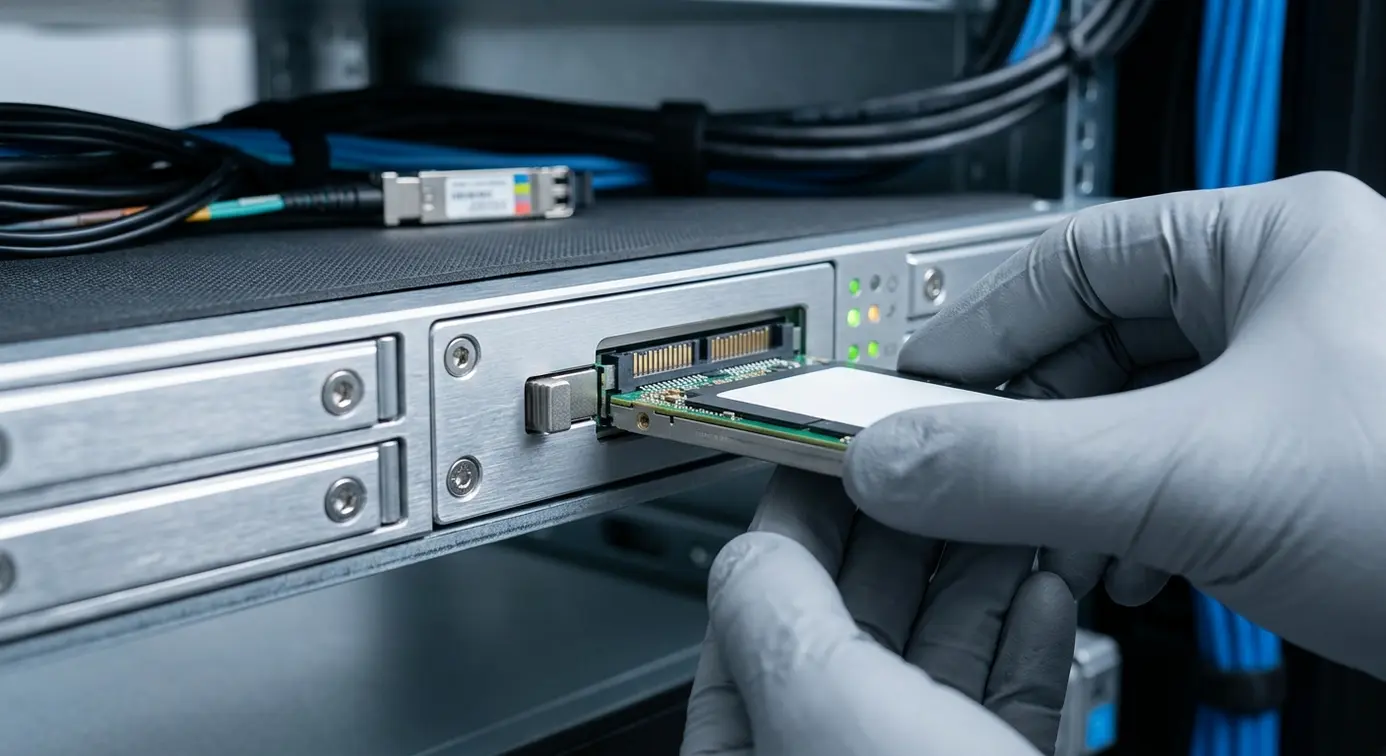
Crypto erase is fast but depends on SED being enabled from day one and logs being provable. Device sanitise is vendor‑implemented and reliable when verified, and it covers remapped blocks and spare areas on SSDs. Overwrite fits mixed fleets and older devices, but on SSDs prefer device sanitise or crypto erase where supported. For governance on method selection and supplier oversight, read what is ITAD and how do I choose my supplier. NIST states one verified pass typically meets Purge on modern media unless policy requires more.
This image was generated with AI and may not always represent the product or service exactly.
NVMe At Scale: Correct Commands And Verification
Use NVMe Sanitize (crypto, block erase, or overwrite) when you need a NIST‑grade Purge with device support. Use Format NVM with secure erase settings for Clear or when re‑initialising namespaces. Automate with nvme‑cli: issue sanitize, poll status, and read log pages to confirm completion and any failure codes. Always record controller and namespace IDs, and ensure all namespaces are included.
- Inventory devices and select method (Sanitize vs Format NVM) per policy.
- Queue jobs per chassis; run sanitize; poll status until complete.
- Verify via sanitize log success codes and targeted read‑backs.
- Export logs; issue certificate; update the asset database.
Control power and cooling to avoid throttling. Batch runs so the rack stays within PSU limits and thermal headroom. For operational playbooks see server maintenance, or use managed ITAD services for businesses at scale.
SAS And SATA Fleets: Secure Erase Done Right
For SAS, prefer SCSI SANITIZE (crypto, block, or overwrite variants) and confirm via sense data and post‑verify reads. Use FORMAT UNIT when re‑initialising media after sanitise or when required by storage vendor guidance. Validate with drive logs and sample reads; avoid relying on quick formats for sanitisation.
For SATA, use ATA Secure Erase or the Sanitize Device feature set. Clear the Host Protected Area (HPA) and Device Configuration Overlay (DCO) before any overwrite. Common tools include sg_sanitize, sg_format, hdparm, and smartctl. Handle frozen states with a controlled power cycle and BIOS/UEFI unlock steps, then re‑run verification.
When Crypto Erase Is Enough—And When It Is Not
Accept cryptographic erase when the SED (OPAL/TCG Enterprise) was enabled from day one, keys are unique per drive, and you can export proof (sanitize logs, key rotation events). For locked states or unknown keys, a PSID revert (using the printed Physical Security ID) returns the drive to factory state, deleting all keys and data.
Check FIPS 140‑2/3 validations rather than marketing terms. If logs are missing, verification fails, or policy demands more assurance, fall back to a verified overwrite or destroy the media. For end‑of‑life devices, choose compliant recycling electronic waste routes.
Building Verified Overwrites You Can Trust
For modern SSDs and HDDs, one full‑disk pass with verification typically meets NIST Purge. Use random data or a fixed pattern your tool can verify. Avoid unnecessary extra passes that add wear and time without improving security.
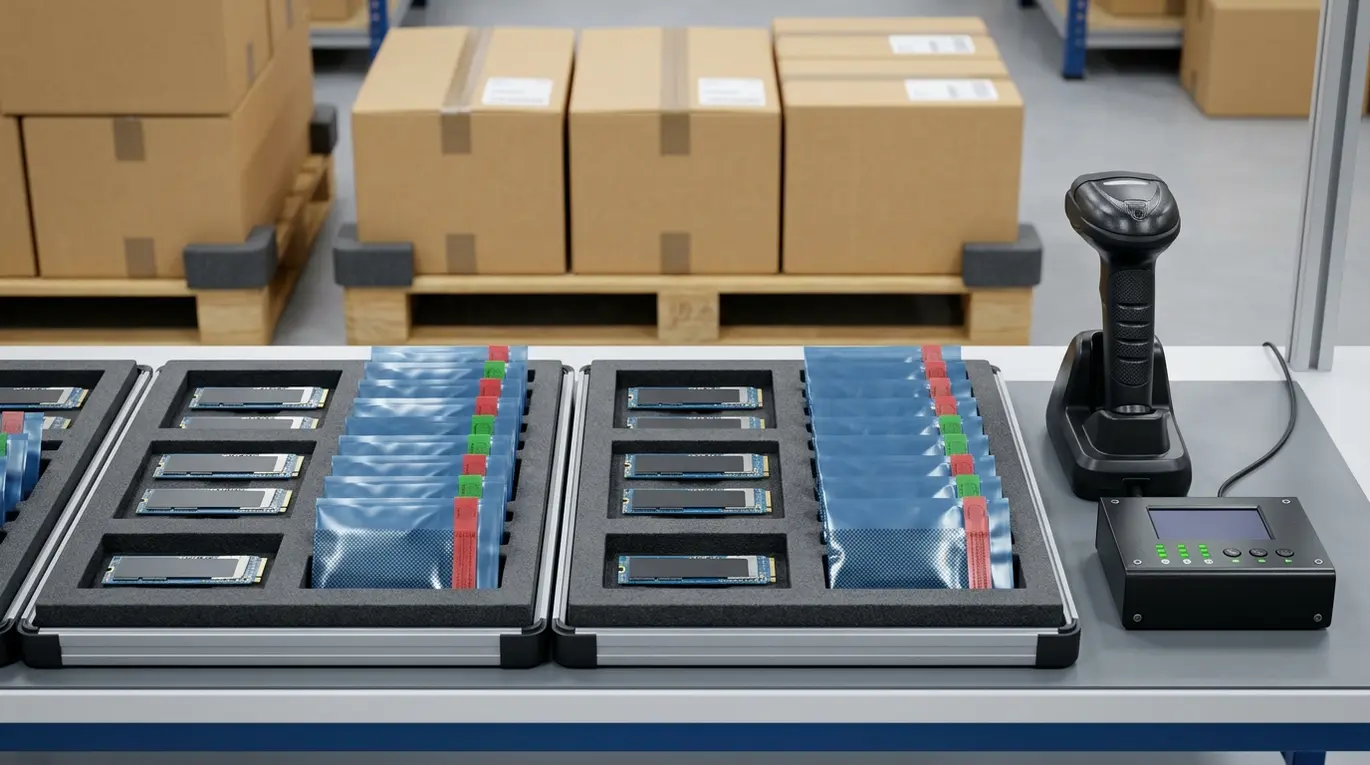
Verify by sampling read‑backs across the LBA range and hashing blocks; record sample density and results (for example ≥1% sampling, or full verify where feasible). Handle edge cases: remove HPA/DCO, note any reallocated or bad sectors, and document unreadables with reason codes. The certificate should clearly state method, pattern, sample rate, and pass/fail outcomes.
This image was generated with AI and may not always represent the product or service exactly.
Audit‑Ready Reporting And Chain Of Custody
Capture complete evidence for every device. Records should include: asset and serial numbers; interface (NVMe/SAS/SATA); method (e.g., NVMe Sanitize Overwrite); NIST outcome (Clear/Purge/Destroy); tool version; operator; start/finish timestamps; job ID; log extracts or hashes; pass/fail; and next action.
Issue named certificates grouped by chassis or collection, signed and exportable (PDF/CSV). Maintain immutable, append‑only logs (e.g., hash‑chained) and optional API feeds to your SIEM. Chain of custody should cover collection, transport, intake checks, sanitise/test, QA review, customer sign‑off, and final disposition.
Automation And Throughput For AI Racks
Plan safe parallelism. Schedule jobs per bay with limits so inrush and steady‑state power do not brown out the chassis. Use BMC and JBOD APIs for slot status, power control, and temperature reads. Stagger starts, and hold queues if any sensor crosses thresholds.
Design clear error handling. Retry transient errors after cooldown, cap attempts, and flag drives for manual triage with exact codes and logs. Prompt operators only when policy requires approval or when a drive needs vendor utilities.
Edge Cases: Firmware, Locked States, And RMAs
If a sanitize stalls, follow a controlled power cycle routine, then re‑poll status. Review firmware advisories; some models need specific microcode or vendor tools to complete Sanitize or PSID revert. For TCG‑locked or frozen states, use the manufacturer’s unlock flow documented in their guides.
For RMA, never ship live data. Attempt crypto erase with logs; if not possible, perform a verified overwrite or physical destroy per policy, then proceed. Keep a short triage checklist: confirm state, try supported command, power cycle once, consult vendor note, escalate or dispose with evidence.
Sustainable Outcomes: Reuse, Resale, And Recycling
Secure sanitising enables reuse with confidence. Drives can be tested, graded, and warrantied, with erase certificates attached for traceability. Buyers expect clear health data, SMART history, and proof of standards mapping.
For failed or worn media, recycle through accredited streams that recover materials and provide Waste Transfer Notes under UK WEEE and duty‑of‑care requirements. This reduces risk and supports sustainability targets while keeping evidence aligned to your asset register.
How Equipment HQ Helps
Equipment HQ delivers sanitising at scale across NVMe, SAS, and SATA. Certified engineers, proven tooling, and controlled handling deliver NIST‑mapped outcomes with full evidence. We operate secure bench processes and can integrate with your asset and ticketing systems.
We offer short lead times, nationwide collection, and SLAs for racks, JBODs, and arrays. You receive an audit pack covering chain of custody, erase certificates, and test logs. See our facility investment in the new clean room in Bishops Stortford, and speak to our team about buybacks, refurb, installs, or compliant disposal.
FAQs
What NIST outcome do I need for AI racks?
Most organisations target Purge for SSDs and HDDs. It protects against advanced recovery and aligns with typical audit expectations. Destroy is reserved for end‑of‑life or failed media.
Is one overwrite pass really enough?
For modern drives, yes—when verified. NIST 800‑88 states one properly verified pass typically meets Purge. Add extra passes only if your policy demands it.
When should I prefer NVMe Sanitize over Format NVM?
Use Sanitize for a standards‑grade Purge with device logs. Use Format NVM for Clear or when re‑initialising namespaces during redeployments.
How do I prove a crypto erase happened?
Export device logs showing key rotation or Sanitize completion codes; include timestamps, tool versions, and operator IDs. Attach these to a signed certificate mapped to NIST outcomes.
What if a drive is frozen or locked?
Use a controlled power cycle, then vendor utilities for TCG states. If still locked, perform a PSID revert using the printed code to factory‑reset and purge keys.
Can Equipment HQ handle mixed fleets at once?
Yes. We schedule per chassis and interface, automate commands, and verify outputs. You receive a single audit pack covering NVMe, SAS, and SATA devices.