
Liquid‑Cooled GPU Racks: Safe Decommissioning, Fluid Handling And Residual Value
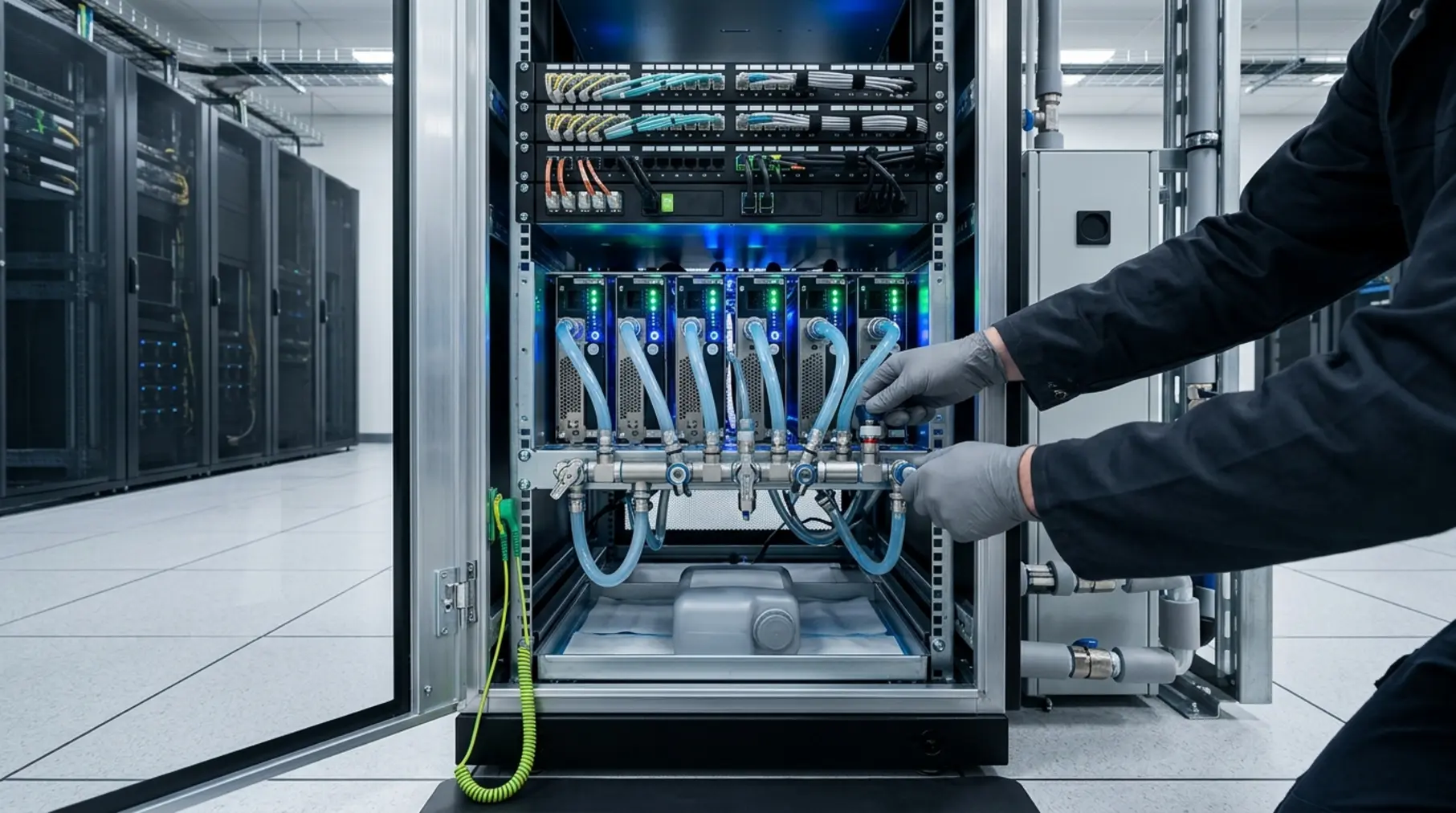
Liquid cooling adds fluid, pressure and contamination risks to a standard server lift. Key components include direct‑to‑chip cold plates (metal blocks that move heat to coolant), quick disconnects/QDs (self‑sealing couplers), manifolds (loop distribution bars) and CDUs (coolant distribution units with pumps and heat exchangers). These components change how you isolate power, depressurise, drain, test and pack assets.
The commercial objectives are clear: protect people and the site, prevent spills and downtime, and maximise resale value. Equipment HQ deploys certified liquid‑cooling engineers with short lead times and multi‑brand knowledge. For a high‑level view of the workflow, see decommissioning GPU servers safely and profitably.
Scope, Asset Audit And RAMS
Start with a pre‑visit checklist. Confirm loop design, coolant chemistry (e.g., water‑glycol mix or dielectric), OEM specs and MSDS/COSHH documents. Note supply/return paths, manifolds and QD positions. Bring calibrated instruments (refractometer, conductivity meter) where needed.
Map serials for servers, GPUs, cold plates, manifolds, pumps and CDUs. Tag assets and build a loop topology for chain‑of‑custody. Draft RAMS (Risk Assessment and Method Statement) and secure a permit‑to‑work. For a step‑by‑step plan, see our GPU server decommissioning playbook.
Site Prep, Safety And Isolation
Apply lockout/tagout on CDUs and server PSUs. Verify system pressure is at zero with a gauge before touching any QDs or valves. Allow a thermal soak so loops cool to safe handling temperatures. Set an exclusion zone with signage and barriers.
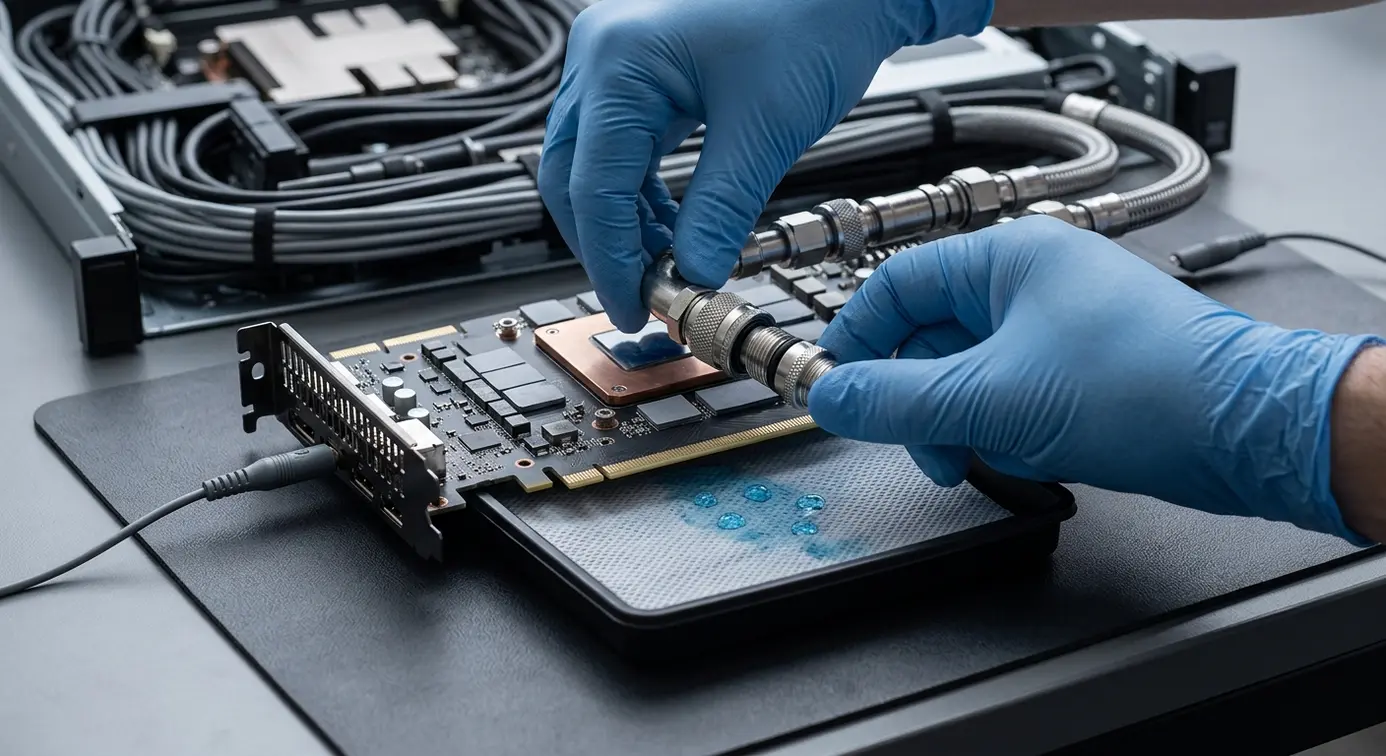
Set up spill control: drip trays, absorbents, spill pallets and bonded storage for recovered fluids. Specify PPE (gloves, eye protection) and note COSHH controls. For compliance across removal and disposal, see ITAD chain of custody and WEEE‑compliant disposal.
This image was generated with AI and may not always represent the product or service exactly.
Closed‑Loop Drain And Capture
Use a closed drain with a vacuum or pump‑out cart connected to service QDs. Sequence valves to prevent air locks and maintain negative pressure throughout; confirm with an inline gauge. Keep the loop sealed wherever possible to reduce contamination and spills.
Fit dripless QDs, caps and blanking plugs on every break. Capture fluids in labelled, sealed containers by loop and chemistry. Record volumes and batch IDs for your file. For reporting templates and EWC coding context, see environmental reporting for large server recycling projects.
Flush, Purge And Dry‑Out
For resale shipping, drain and dry the loop. Only leave charged if the equipment will stay installed and in use, with OEM sign‑off. If residues remain, run a deionised (DI) water flush until readings meet OEM targets for conductivity/ppm and lines run clear.
Check inhibitor/biocide status and record results. Purge with dry nitrogen to remove moisture, then cap all ports immediately. This limits corrosion risk and protects buyer confidence.
Contamination Control And Quality Assurance
Adopt simple, recognised QA checks. Inspect filters (cut‑open if practical), log particle levels, and sample coolant for glycol percentage and pH. Where relevant, swab for biogrowth and note any staining or mixed chemistries.
Record every sample with chain‑of‑custody. Red flags include corrosion product, biofilm, scale, green/blue staining, or cross‑mixed fluids. Bundle results into a buyer‑ready pack; see from audit to certificate: building a defensible ITAD record.
Manifold, Hose And Cold‑Plate Assessment
Visually inspect QD wear, O‑ring hardness or cracking, cold‑plate staining and any scale inside manifolds. A borescope helps check internal passages. Replace fatigued seals before testing.
Run a low‑pressure leak test with documented pressure, dwell time and pass criteria. Grade parts: A (clean, passes pressure test), B (minor seal refresh), C (scrap or donor). Proven, pressure‑certified parts achieve higher bids.
This image was generated with AI and may not always represent the product or service exactly.
Documentation, Chain‑Of‑Custody And Environmental Compliance
Build an audit pack: loop map, serial map, photos pre‑/post‑drain, pressure‑test certificate, fluid logs and cleaning/flush records. Add waste transfer notes with correct EWC codes and any consignment paperwork for off‑site treatment. Retain permits and LOTO records.
This file shortens buyer due diligence and supports internal audits. It also evidences environmental duty of care from removal to receipt.
Data Sanitisation And BMC Resets
Plan erasure before you pack. Use NIST 800‑88 compliant tools and produce tamper‑proof logs for SSD/NVMe. Reset BMC/IPMI to factory defaults and remove network credentials. Where policy allows, clear TPM/secure boot keys.
Proof of erasure widens your buyer pool and protects price. For scale methods on AI racks, see sanitising NVMe at scale.
Packing, Transport And Spill‑Risk Mitigation
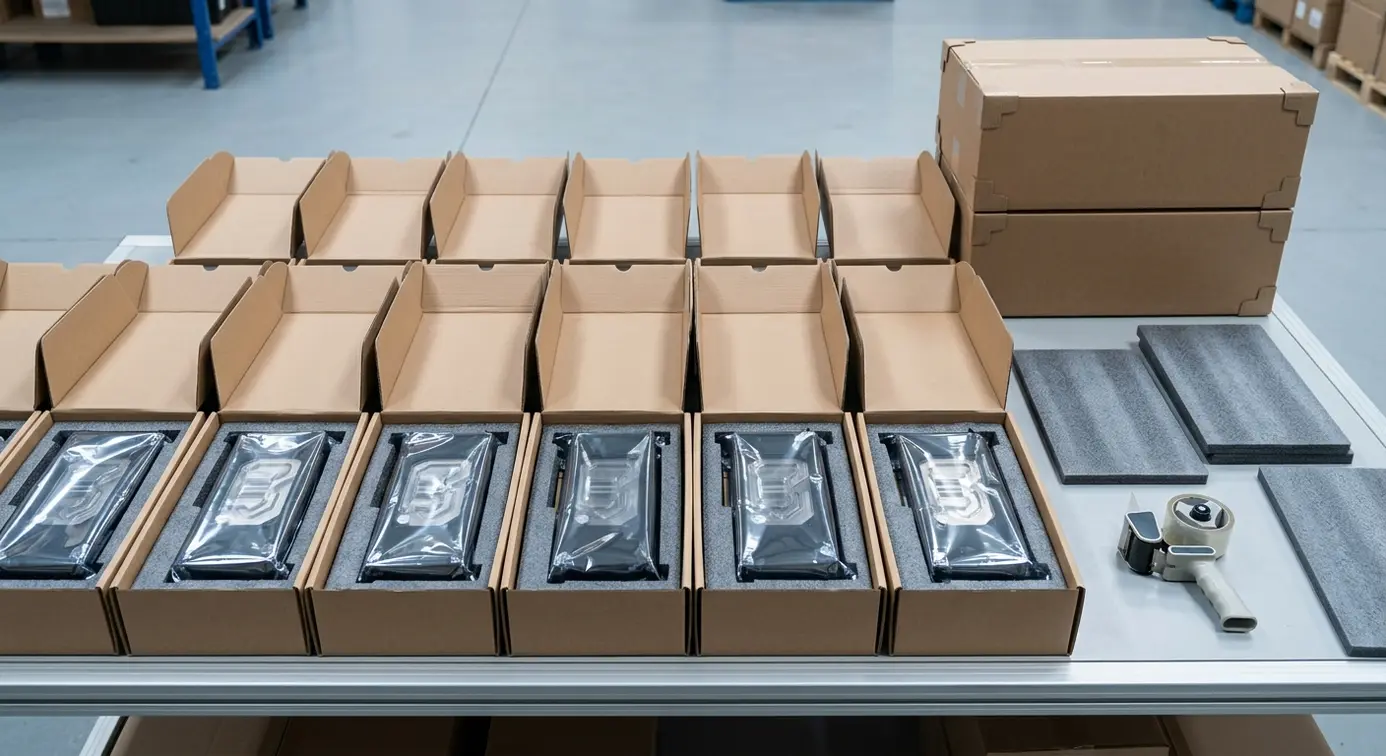
Ship racks, CDUs, manifolds and cold plates dry. Fit pressure‑equalised caps or plugs to all ports. Add desiccant and bag assemblies to control moisture in transit. Use dust covers to protect QDs.
Use UN‑approved, sealed drums for recovered fluids. Line crates with absorbents and label clearly. Add tilt and shock indicators, and provide handling notes for couriers and drivers. If fluids classify as hazardous under ADR, consign accordingly.
Residual Value: What The Market Pays For
Buyers pay more for cleanliness, pressure‑test certificates and full provenance. Complete loop hardware (including QDs and seals) and a uniform coolant history also help. Missing QDs, mixed chemistries, corrosion or stained cold plates reduce bids.
Demand is strongest for current and near‑current accelerators and platforms. Evaluate whole‑rack resale versus part‑out of GPUs, cold plates, manifolds and CDUs. For risk control on top‑end kits, read de‑risking H100/H200 server disposals.
Commercial Routes And Timelines
Choose a route that fits your goals: direct sale to Equipment HQ for fast payment, consignment for higher returns, or trade‑in against tested refurbished kit. We offer responsive scheduling, certified engineers and warranty on refurbished hardware.
Typical fast‑track timeline: site survey (day 0) → RAMS (day 2) → drain/flush (days 5–7) → QA pack (day 9) → resale decision (day 11) → payment on completion of agreed terms.
Practical Checklist And Next Steps
Use these quick checks to avoid delays and protect value.
- Pre‑lift and drain: RAMS approved, permit‑to‑work, LOTO kit, spill kit, drip trays, caps/plugs, labels, DI water, dry nitrogen, calibrated meters/gauges.
- Isolation: CDU powered down and locked, zero pressure confirmed, thermal soak complete, service QDs identified and accessible.
- QA and documents: serial map, loop diagram, photos, pressure‑test certificate, fluid logs, MSDS/COSHH, waste transfer notes, erasure certificates.
- Packing: port caps fitted, desiccant placed, absorbent liners, crate labels, tilt/shock indicators, courier handling notes.
Ready to move? Book a site survey with Equipment HQ and start your valuation today.
FAQs
How Long Does A Drain And Flush Take Per Rack?
Most single racks drain in 1–3 hours, depending on loop volume and access to service QDs. Add time for DI flush and nitrogen purge if required.
Can We Ship With Coolant Still In The Loops?
We advise dry shipping for safety, compliance and value protection. Only keep loops charged if equipment stays installed and OEM‑approved.
What Coolants Do You Handle And How Are They Classified?
We handle water‑glycol and dielectric fluids under COSHH controls. Fluids are captured, labelled by chemistry and managed with the correct EWC codes.
Do You Remove CDUs And Manifolds As Well As Servers?
Yes. Our certified engineers isolate, drain, de‑install and pack CDUs and manifolds with pressure caps and desiccant, including associated pipework.
What Proof Do Buyers Expect?
Expect a loop map, serial map, photos, pressure‑test certificates, fluid sampling logs and data erasure certificates. A complete pack shortens sales cycles and lifts bids.