

Why Risk-Controlled GPU Decommissioning Matters
A GPU node is a server fitted with accelerators for training and serving AI models. An AI cluster is a managed group of these nodes. Retiring nodes requires tight engineering control to protect data, people, uptime, and resale value.
- Data protection: certified media wiping and verifiable audit trails.
- Environmental safety: closed-loop coolant capture and licensed disposal.
- Service continuity: a tested change plan with rollback to avoid downtime.
- Asset value: proof-of-life testing and careful handling to maximise resale.
Controls align to GDPR, NIST SP 800-88 (media sanitisation), ISO 27001 (information security), and WEEE (end-of-life). See our overview of GDPR compliance.
Set KPIs up front to keep the project measurable and defensible:
- Zero data incidents and zero spills.
- <1% DOA on remarketed parts.
- Complete, serialised audit trail and SLA adherence.
Plan And Control The Change
Start with a complete, serialised asset baseline:
- Capture per-node details: server model, GPU type/count, NVMe, RAM, NICs, firmware/BIOS, coolant type, and rack power.
- Photograph labels, serials, and rack positions; link images to the asset register.
- Build a hardware and software bill of materials traceable to each chassis.
Control the change:
- Define a maintenance window and a proven rollback plan.
- Document a pre-job risk assessment and method statement (RAMS).
- Assign roles using a RACI; secure stakeholder sign-off and change approval.
- Stage spares and on-call cover if needed. Our server maintenance & support guide covers the practicalities.
Drain Workloads And Prepare Nodes
- Scheduler drain:
- Kubernetes: cordon and drain; confirm no active containers or GPU MIG partitions remain.
- Slurm: set nodes to drain; verify the queue is clear before shutdown.
- Snapshot configs, containers, and datasets to approved storage; hash key configs for integrity.
- Record a health baseline: temperatures, error logs, GPU inventory, and a short power-on video (proof-of-life).
- For storage targets and governance fit, see choose the right data storage solution.
This image was generated with AI and may not always represent the product or service exactly.
Safe Power-Down, Isolation, And Coolant Handling
- Apply lockout–tagout on rack power; verify isolation with a safe test.
- Check indicator LEDs and attempt a controlled power-on to confirm zero energy; discharge per OEM guidance.
- For liquid-cooled kit (direct-to-chip, rear-door heat exchangers, CDUs):
- Follow valve sequencing; relieve pressure; capture coolant via a closed loop.
- Log coolant type and volume; keep MSDS available; stage spill kits and labelled containers.
- Dispose via licensed carriers with waste transfer notes. For options and duty of care, read recycling electronic waste hardware disposal.
NVMe And Storage Sanitisation (NIST SP 800-88)
Use purge-grade methods matched to the drive:
- Self-encrypting drives: crypto-erase.
- NVMe: sanitize (block erase or overwrite) per vendor tools/spec.
- SATA/SAS: ATA Secure Erase or vendor secure erase utility.
Operate to a vendor-agnostic runbook with command-level steps, operator initials, timestamps, and device serials to meet NIST SP 800-88.
- Verify with SMART/health checks, sample hashing, and wipe reports tied to serial numbers.
- For failed media: perform on-site shredding or, where applicable, degaussing; issue certificates of destruction.
- This supports GDPR data minimisation and accountability. See how to avoid security issues when recycling network hardware.
Chain Of Custody And Secure Logistics
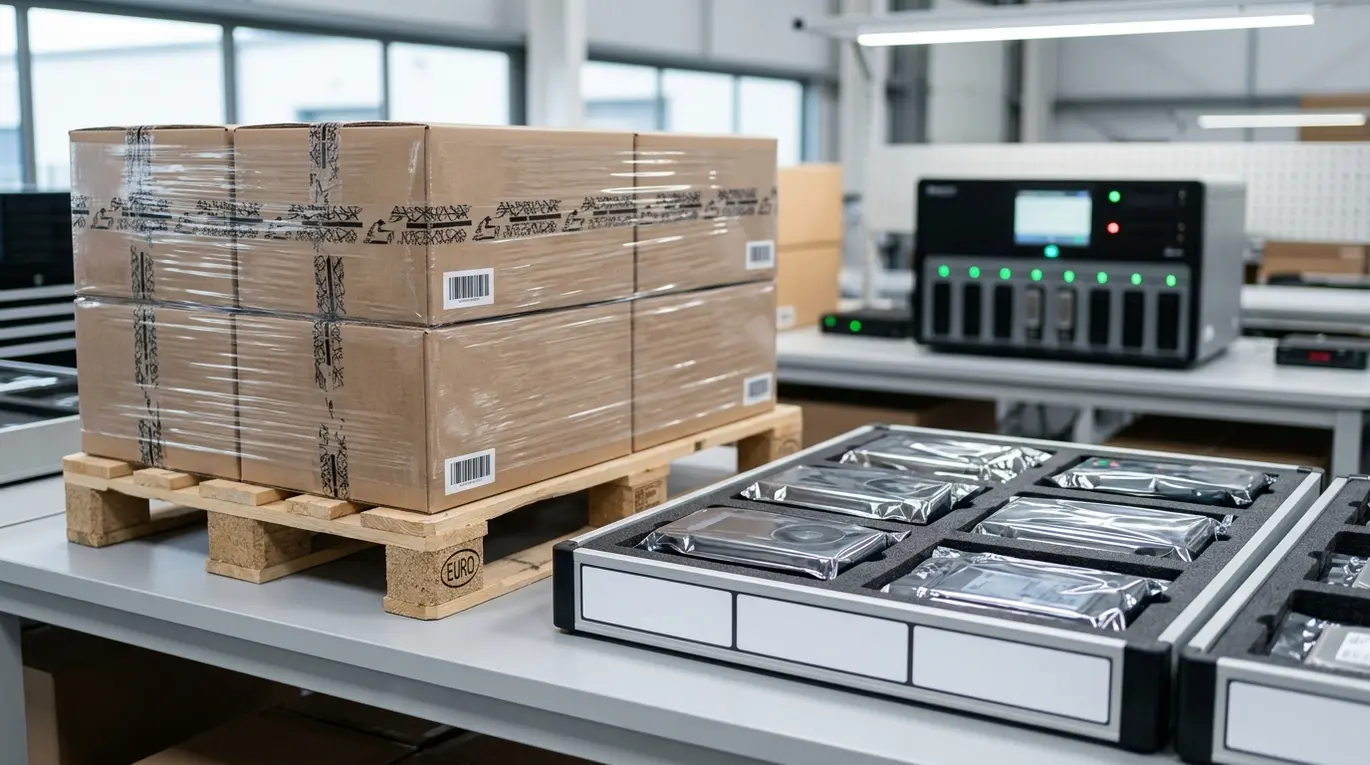
- Tag each asset; scan serials; photograph condition before movement. Fit tamper-evident seals.
- Use sealed cages/crates; keep records tied to the asset list for traceability.
- Book GPS-tracked, insured transport with sign-on-glass receipts.
- Define custody handover points and timestamps from data hall to lab.
- Choose on-site wipes where policy or risk requires it; off-site works where seals remain intact throughout.
Disassembly, Cleaning, And Component Testing
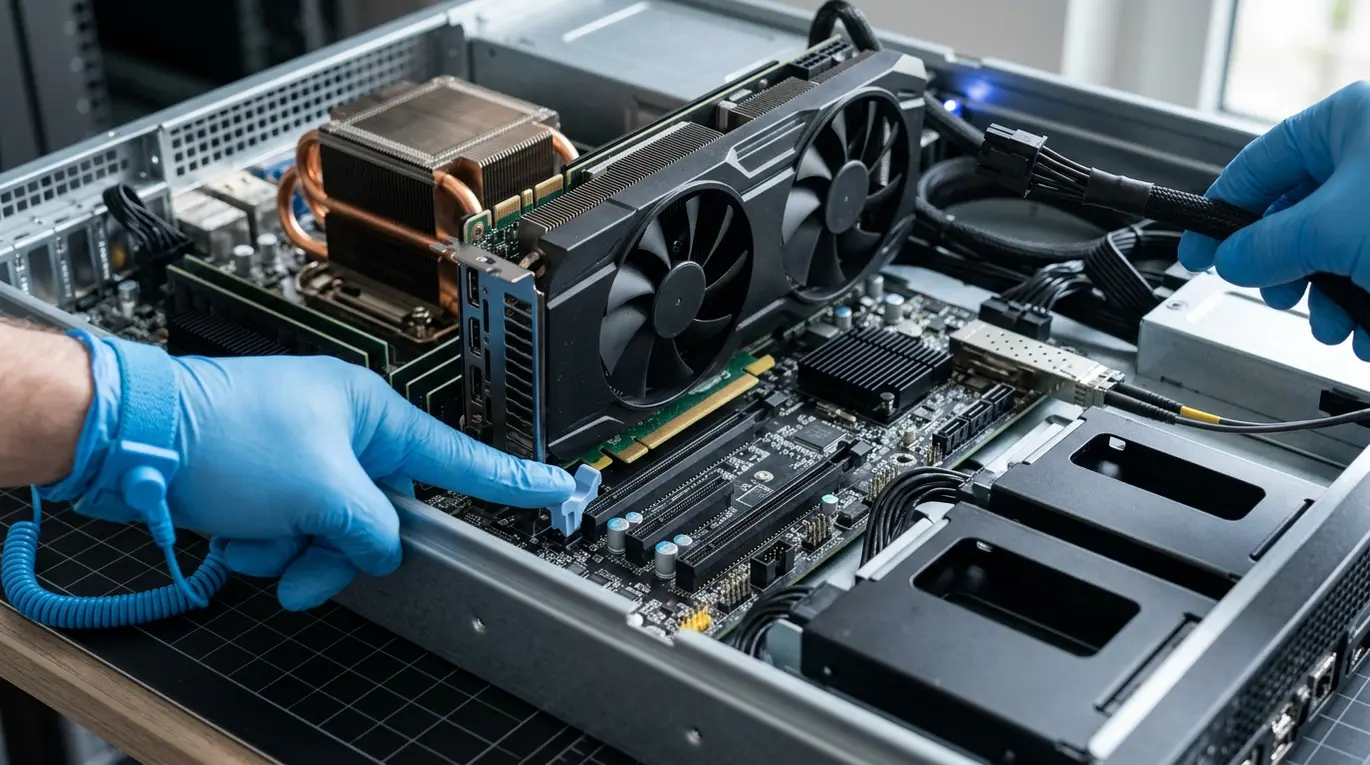
- Work at an ESD-safe bench; use correct supports to remove GPUs and heavy heatsinks.
- Inspect connectors, edge fingers, fans, and any cold-plate residue; note defects and cosmetic grade candidates pre-test.
- Run GPU burn-in for 2–4 hours with stress tools and ECC monitoring; set thresholds for temperature, clocks, power draw, and error rates.
- Test RAM with multi-pass diagnostics; check NIC links at rated speeds; assess NVMe health and life remaining.
- Capture firmware/BIOS versions; update where it improves compatibility and resale.
- Clean using approved antistatic methods for reliable remarketing.
This image was generated with AI and may not always represent the product or service exactly.
Remarketing Accelerators And RAM For Maximum Value
- Grade consistently (A/B/C) with clear cosmetic criteria; provide test certificates linked to serials.
- Offer a 30–90 day warranty and a simple DOA path to build buyer confidence.
- Choose channels:
- Direct buyback for speed.
- Marketplaces for reach and price discovery.
- Trade-in when bundling upgrades.
- Share compatibility notes; offer install kits (GPU plus power cables, risers, brackets) to de-risk installs.
- Prioritise fast settlement and honest grading to increase reuse and yield.
Sustainability, Compliance, And Reporting
- Sort outputs into WEEE streams: populated boards, metals, plastics, and batteries.
- Route coolant and mixed waste via licensed partners with full documentation.
- Track reuse first; recycle the remainder; minimise landfill.
Deliver a complete audit pack:
- Chain of custody, wipe/destruction certificates, asset list, photos, transport documents.
- Diversion-from-landfill figures and estimated CO2e savings for Scope 3 (using recognised factors).
- Retain records to satisfy GDPR, ISO 27001, and WEEE audits.
Timeline, Templates, And Acceptance Checklist
A typical plan runs 2–4 weeks:
- Plan and baseline.
- Drain and snapshot.
- Power-down and isolate.
- Wipe and pack.
- Transport.
- Test and grade.
- List for resale.
Add gating reviews at each stage so issues do not roll forward.
Acceptance checklist:
- Signed RACI and change approvals.
- Complete asset capture with images and serials.
- LOTO and coolant handling records.
- NIST SP 800-88 sanitisation evidence (or destruction certificates).
- Logistics handover records and GPS logs.
- Test reports, grading outcomes, and warranty terms.
- Final KPI report and complete audit pack with stable file naming/version control.
How Equipment HQ Delivers Risk-Controlled Decommissioning
Equipment HQ delivers the full flow: planning support, asset capture, on-site wipes, coolant handling, sealed logistics, clean-room testing, and remarketing. Our engineers are certified across multi-brand platforms and follow documented methods.
We provide fast SLAs, UK-wide collection, warranties on refurbished parts, and audit-ready reporting. For a scoped plan and firm quote, see our ITAD services for businesses.
FAQs
How long does a GPU decommission usually take?
Most projects complete in 2–4 weeks end to end, depending on node count, cooling complexity, and whether wipes are on-site or off-site.
Can you work in live data halls without disruption?
Yes. We schedule maintenance windows, drain workloads cleanly, and use lockout–tagout. A rollback plan is in place if any service risk appears.
What proof do we get that data is wiped?
Wipe logs tied to serials, verification results, and certificates of wipe or destruction, aligned with NIST SP 800-88.
How are liquid-cooled systems handled safely?
We follow OEM valve sequencing and pressure relief. Coolant is captured in closed loops, labelled, and routed via licensed waste partners.
What happens to failed drives that cannot be erased?
They are shredded or, where applicable, degaussed on-site. Certificates of destruction are included in the audit pack.
How is resale value maximised on GPUs and RAM?
Through consistent testing and grading, proof-of-life, bundled accessories, and clear warranties to reduce DOA and improve pricing.