
What This Guide Covers And Who It’s For
This guide explains how to produce audit‑ready evidence for CO2e, reuse rates and landfill diversion when decommissioning large server estates. It shows how to map results to UK WEEE obligations, ISO 14001 objectives and common CSR/ESG disclosures. It is written for sustainability leads, data centre managers, HSE/Compliance teams, finance, and your IT asset disposition (ITAD) supplier.
“Audit‑ready” means traceable source data, signed records, repeatable methods and transparent calculation notes. Agree task ownership and success criteria before you start. For context on impacts and end‑of‑life routes, see the environmental impact of IT waste and how ITAD can help and IT hardware disposal options explained. Action: write a one‑page mandate with objectives, KPIs, roles, boundaries and sign‑off criteria.
Define Scope And Boundaries For A Server Recycling Project
List assets in scope: rack servers, blades, storage arrays, network switches, routers, PSUs, UPS units, batteries, cables and racks. Capture asset tags, serials, drive counts and media types. Record site locations, access constraints (lift limits, loading bays, security) and any third‑party logistics.
Set reporting boundaries. Confirm included sites, where processing occurs, and exclusions. Report by weight (kg) and, where useful, by unit; exclude packaging and fixtures not part of the asset. Define streams and destinations: reuse, repair, parts harvest, recycling, hazardous items (e.g., batteries), and final disposal. Action: issue a scope register and a simple data‑flow diagram so all parties understand inclusions and exclusions. For end‑of‑life planning, review retiring old network equipment: points to consider.
Collect The Right Data On Day One
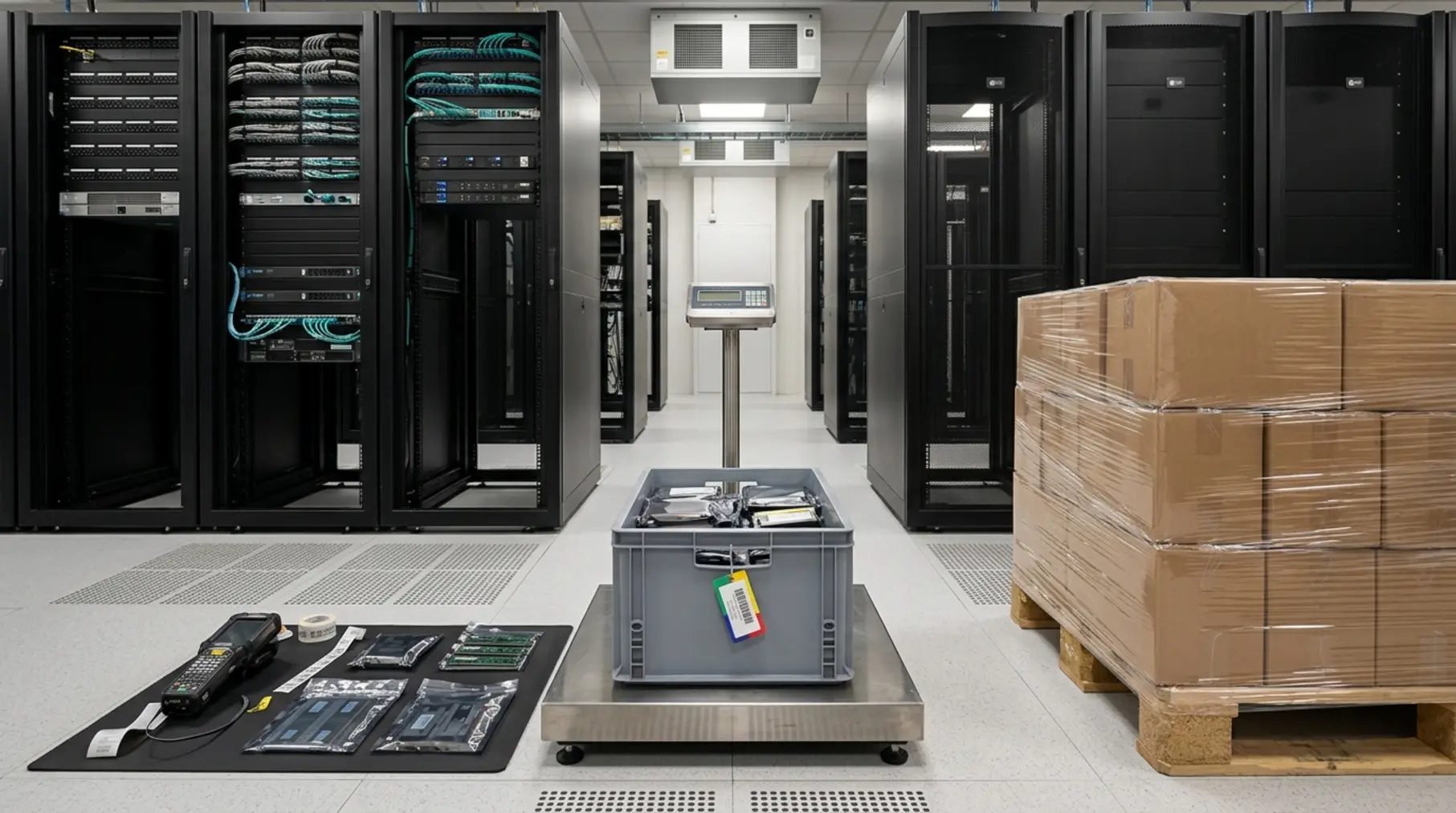
Start with a standard intake checklist. Record asset type, make/model, serial/asset tag, drive count and type, condition grade and photos. Log handover timestamps, signatories and seal numbers to maintain chain‑of‑custody. Use barcode or RFID scanning to reduce errors and speed processing; ensure timestamps use a single time zone and format.
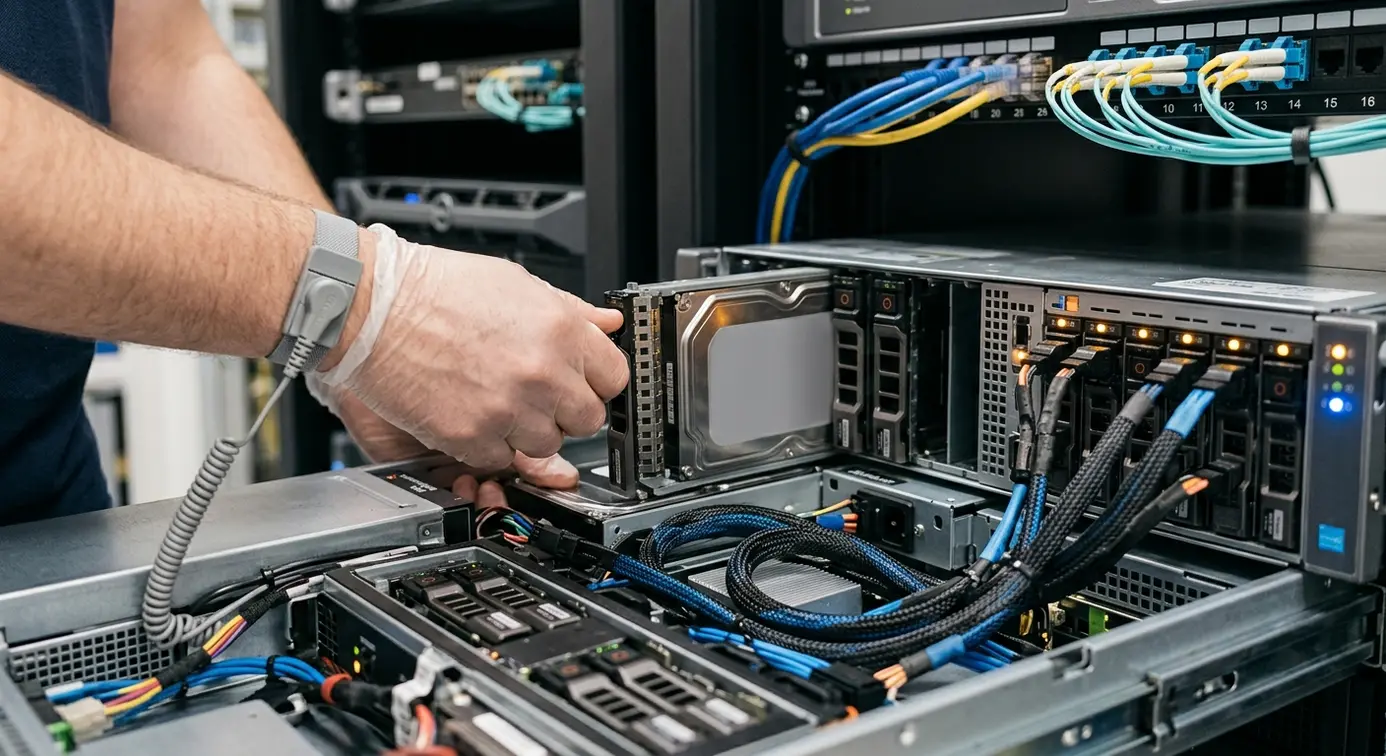
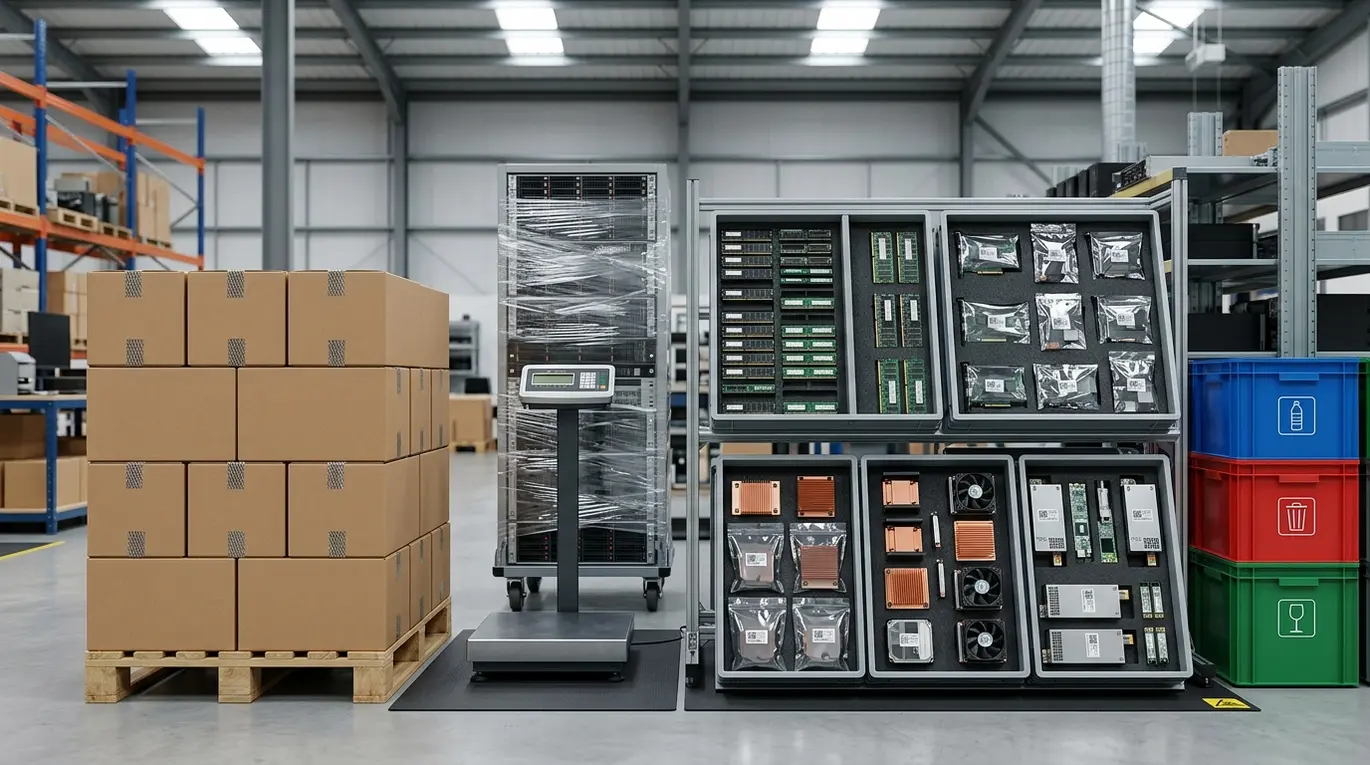
Weigh assets by stream using calibrated scales; file calibration certificates and weighbridge tickets where used. Grade items to reuse, parts or recycling. For data‑bearing devices, apply certified wiping (e.g., NIST 800‑88) or shredding and store certificates against each device ID. See how to avoid security issues when recycling network hardware and ensure controls align with GDPR compliance. Action: use a standard intake template and verify a 10% sample on site.
This image was generated with AI and may not always represent the product or service exactly.
Calculate CO2e The Defensible Way
State your method up front. Use the UK Government GHG Conversion Factors for Company Reporting for transport and energy. For embodied carbon, use OEM lifecycle data or peer‑reviewed studies for servers and storage; if unavailable, use conservative proxies and cite sources with dates and versions.
Calculate CO2e generated from transport, processing and disposal. Calculate CO2e avoided from reuse by multiplying reused units (or kg) by embodied carbon per unit (or per kg); if appropriate, apply a remaining‑life or functional‑equivalence factor and disclose it. Report gross, avoided and net figures (net = avoided − generated). Keep a factors register noting sources, dataset names and publication years. Action: build a simple spreadsheet with inputs, factor lookups, formulas and an assumptions tab linked to your evidence pack.
Measure Reuse Rate And Landfill Diversion
Define metrics clearly on page one. Reuse rate (%) = reused (by weight or unit) ÷ total inbound × 100. Landfill diversion (%) = (reused + recycled) ÷ total inbound × 100. Disclose energy recovery separately and do not include it in diversion unless your policy states otherwise.
Choose unit‑ or weight‑based reporting and keep it consistent across periods. Avoid double counting when harvesting parts: attribute outcomes either to reuse (parts) or to recycling, not both. State if weights are net of packaging and cables. Action: publish your chosen basis and formulas in each report. For context on end‑of‑life outcomes, see 5 reasons recycling beats landfill.
Build An Audit Evidence Pack
Create a standard, repeatable pack for each job. Include intake logs, chain‑of‑custody forms, photos, weighbridge/scale tickets, wiping/shredding certificates, AATF/processor tickets, downstream vendor declarations, and transport records with distances and vehicle types. Add waste transfer notes (WTNs) and hazardous waste consignment notes where applicable.
Use a fixed folder structure and naming convention with job ID, date and site. Keep version‑controlled calculation sheets and a signed methodology note. Record sampling plans and site visit notes. Action: set a seven‑year retention policy and role‑based access aligned to your compliance and customer obligations.
Map Outputs To WEEE Obligations
Classify servers and related kit under IT and telecommunications equipment. Typical UK EWC codes include 16 02 14 for non‑hazardous WEEE and 16 02 13* for hazardous items where applicable. Use correct battery codes (e.g., 16 06 01* lead‑acid, 16 06 02* Ni‑Cd, 16 06 05 other batteries) for loose or embedded cells and confirm with your waste broker.
Ensure transfer or consignment notes match weights and categories and include carrier/broker licence numbers and site permit references. Keep Approved Authorised Treatment Facility (AATF) evidence for processing. For cross‑border moves, retain notifications and Annex VII documents where required. Action: add a WEEE mapping table in your appendix showing equipment classes, EWC codes and document types. For practical guidance, see recycling electronic waste: hardware disposal.
This image was generated with AI and may not always represent the product or service exactly.
Align With ISO 14001 Objectives And Controls
Link this project to ISO 14001. Under aspects and impacts, include end‑of‑life of IT assets. Set objectives for reuse %, diversion % and net CO2e avoided, with annual targets and responsible owners.
Define operational controls for intake, weighing and downstream checks. Ensure staff and suppliers are competent and trained. Monitor quarterly and present results at management review. Action: add KPIs to your EMS objectives register and build them into your internal audit schedule.
Report Into CSR And ESG Frameworks
Use concise KPIs: total inbound weight, reuse %, diversion %, gross CO2e generated, CO2e avoided and net CO2e. Map to GRI 306 (Waste) and GRI 305 (Emissions). For UK SECR, include methodology notes and emission factors with versions.
Produce a board one‑pager with trend charts, a short narrative on risks and opportunities, and any cost savings or avoided procurement. Include boundaries and materiality notes so readers understand scope. Action: publish a quarterly CSR dashboard and brief leadership on performance and corrective actions.
Templates And Automation
Provide an intake CSV with columns for Job ID, Site, Date, Asset Type, Make/Model, Serial, Drives, Condition, Stream, EWC Code, Gross kg, Net kg, Distance km, Photos Ref and Signatures. Build a CO2e sheet with inputs, factor lookups (versioned), outputs (generated, avoided, net) and assumptions.
Add a simple KPI dashboard that tracks monthly performance and variance to target. Automate data capture with barcode scanning and bulk imports from the ITAD system; validate with duplicate checks and outlier flags. Action: pilot templates on a small batch, validate results, then roll out project‑wide with training and checks.
Delivery Timeline And Responsibilities
Pre‑project (weeks −2 to 0): confirm scope, risks, templates, calibrated scales, logistics and site access. Collection to processing (weeks 0 to 2): inventory, wiping, weighing, grading, transport and interim reporting. Close‑out (weeks 2 to 4): final calculations, evidence pack, sign‑off and lessons learned.
Assign clear RACI roles across internal teams and your ITAD partner. Publish milestones, owners and dependencies so everyone knows who moves first. Action: share a live timeline and review it at each gate.
How Equipment HQ Can Help
Equipment HQ delivers certified ITAD with secure wiping or shredding, full chain‑of‑custody and audited downstream routes. Our engineers collect fast, test and refurbish to optimise reuse, and provide clear evidence packs for audits.
We also support maintenance, repairs and buy‑back to keep assets in service longer. Action: book a scoping call and request our sample evidence pack and template set. To see our capabilities, visit ITAD services for businesses.
FAQs
How Accurate Do Our Weights Need To Be?
Use calibrated scales and record calibration dates and certificates. Keep weighbridge tickets where used. If estimates are unavoidable, document your method, assumptions and confidence level.
What Evidence Do Auditors Expect For Data Wiping?
Device‑level certificates tied to serials, method (e.g., NIST 800‑88), date, operator and result. Include exception logs, rework attempts and any shred certificates for failed wipes.
Can We Count Harvested Parts As Reuse?
Yes, if parts are tested and re‑deployed. Do not also count the same mass as recycling. State your approach and testing criteria to avoid double counting.
How Often Should We Update Emission Factors?
At least annually, or when a new official set is released. Record factor versions and apply them consistently within each reporting period; explain any restatements.
What If We Cannot Weigh Items On Site?
Weigh at the processing facility and retain tickets. Use itemised inventories to reconcile units to weights, note any moisture/packaging effects and explain gaps.
Do We Need A Site Visit For Every Project?
Not always, but plan sampling and periodic site audits. Record visits, photos and findings in the evidence pack to maintain assurance and verify downstream routes.