
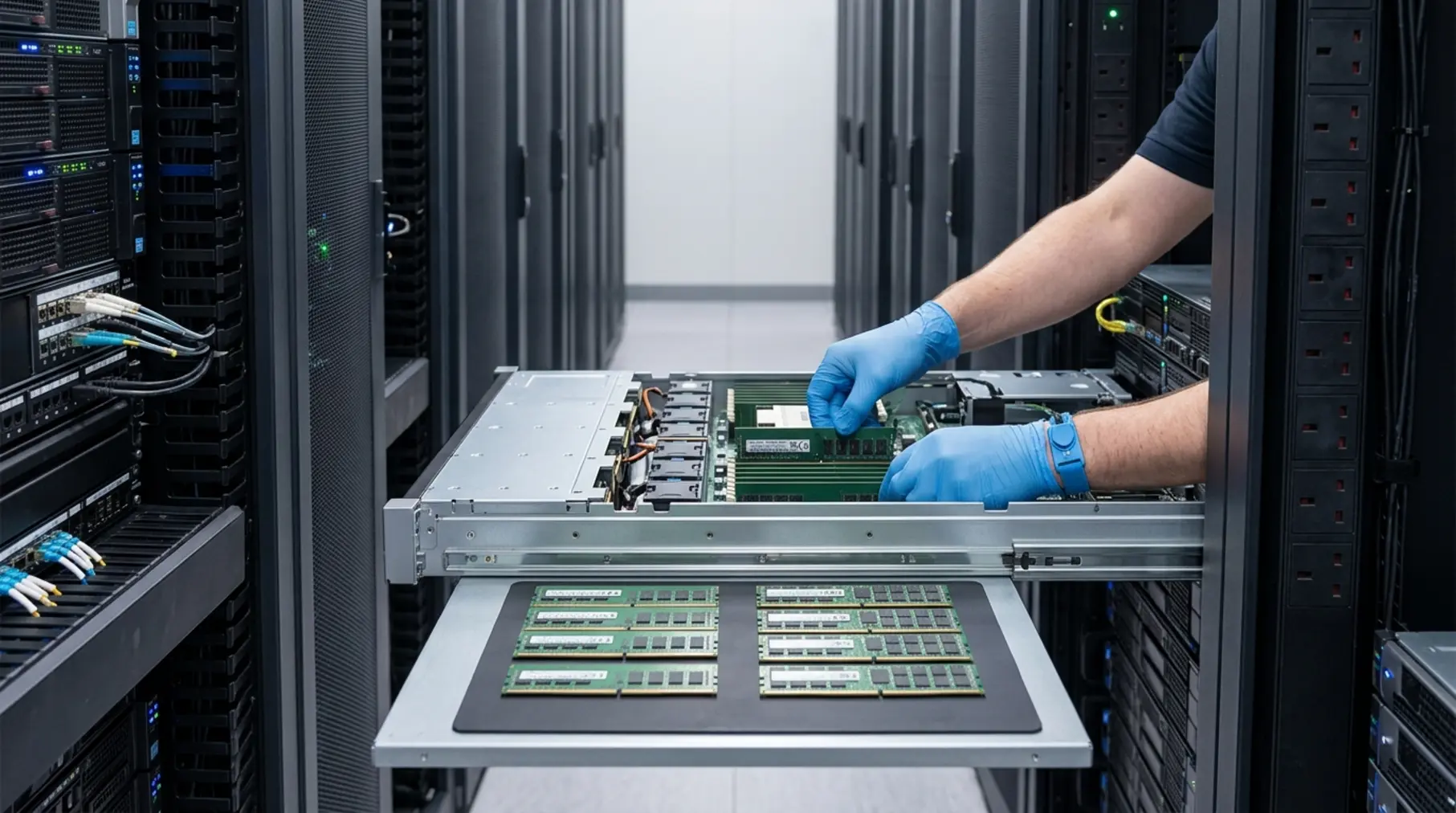
DDR4 vs DDR5 ECC in 2026: Quick View
The secondary market has moved quickly. Hyperscalers have shifted core fleets to DDR5 hosts to support GPU clusters, while fabs have prioritised HBM, tightening supply on premium DDR5 bins. DDR4 remains attractive in repurposed CPU nodes for inference, storage and virtualisation where capacity per pound still wins.
Quick actions:
- Budget for firm pricing on DDR5 64/96/128GB RDIMMs; buy early for larger rollouts.
- DDR4 retains strong value in EPYC Milan and Intel Ice Lake inference farms.
- Track UK/EU auction calendars and broker RFQs to time purchases.
- De-rack lots sell faster as matched sets with full test reports and provenance.
- See market round-ups on our blog and, on the sell side, read why you should sell your old business IT hardware.
What AI Workloads Need From Memory (and Why It Moves Price)
Training relies on GPU memory but still needs balanced host RAM. High channel utilisation and steady bandwidth reduce stalls in GPU feeds. Typical host speeds: DDR4-2933/3200 on older platforms; DDR5-4800/5600/6400 on newer, raising bandwidth per channel and per core. At inference scale, capacity per node and predictable timings matter more than peak speed.
ECC types in brief: RDIMM uses a register for signal integrity; LRDIMM adds buffers to support higher capacities; 3DS stacks dies (e.g., 8Hi) for denser modules. DDR5 adds an on-module PMIC, improving stability but adding test steps. Parts with steady demand: DDR5 RDIMM 64/96/128GB and DDR4 LRDIMM 64/128GB. For planning checklists, see server maintenance: what to know and where to start.
2026 Supply Dynamics: Where Secondary Modules Come From
Supply typically flows from three sources: hyperscaler de-racks during DDR5 migrations, OEM lease returns, and integrator overstocks after project changes. Clean, large lots with known provenance clear fastest and achieve stronger grades.
HBM priority at leading fabs limits some DDR5 yields, nudging spot prices up on specific bins. Scarce SKUs to watch:
- DDR4 128GB LRDIMM 4Rx4
- DDR4 64GB 2Rx4 3200 MT/s
- DDR5 64GB and 96GB RDIMM at 4800–6400 MT/s
- High-capacity 3DS modules
Brand, rank and speed influence yield and resale. For compliant returns, see IT hardware disposal options explained and our ITAD services for businesses.
This image was generated with AI and may not always represent the product or service exactly.
Demand Signals to Track Each Week
Watch broker RFQ volume by speed and density. Spikes in DDR5-5600/6400 64/96GB usually mirror GPU cluster installs. Monitor auction calendars for ex‑hyperscale lots and OEM lead times for new DDR5 servers.
- Standing watchlist: DDR5-5600/6400 64/96GB; DDR4-3200 64/128GB.
- Correlate spot moves with confirmed, bookable demand to avoid overpaying when sentiment runs ahead of shipments.
DDR4 vs DDR5 ECC: Choosing the Right Platform Fit for AI
DDR4 suits EPYC Milan and Intel Ice Lake nodes handling inference, storage, analytics and mixed virtualisation. It delivers solid capacity at low cost per GB. DDR5 is essential for EPYC Genoa/Bergamo and Intel Sapphire Rapids when bandwidth per core and per channel affects GPU feed and training throughput.
Quick ROI view: DDR4 wins on cost per GB; DDR5 wins on performance per watt and node throughput. Rules: keep RDIMM vs LRDIMM consistent; avoid mixing ranks; match speeds to the CPU IMC limit; populate channels evenly. Unsure about buying used? Read should I buy refurbished IT hardware.
Harvesting and Handling: Safe Recovery That Protects Value
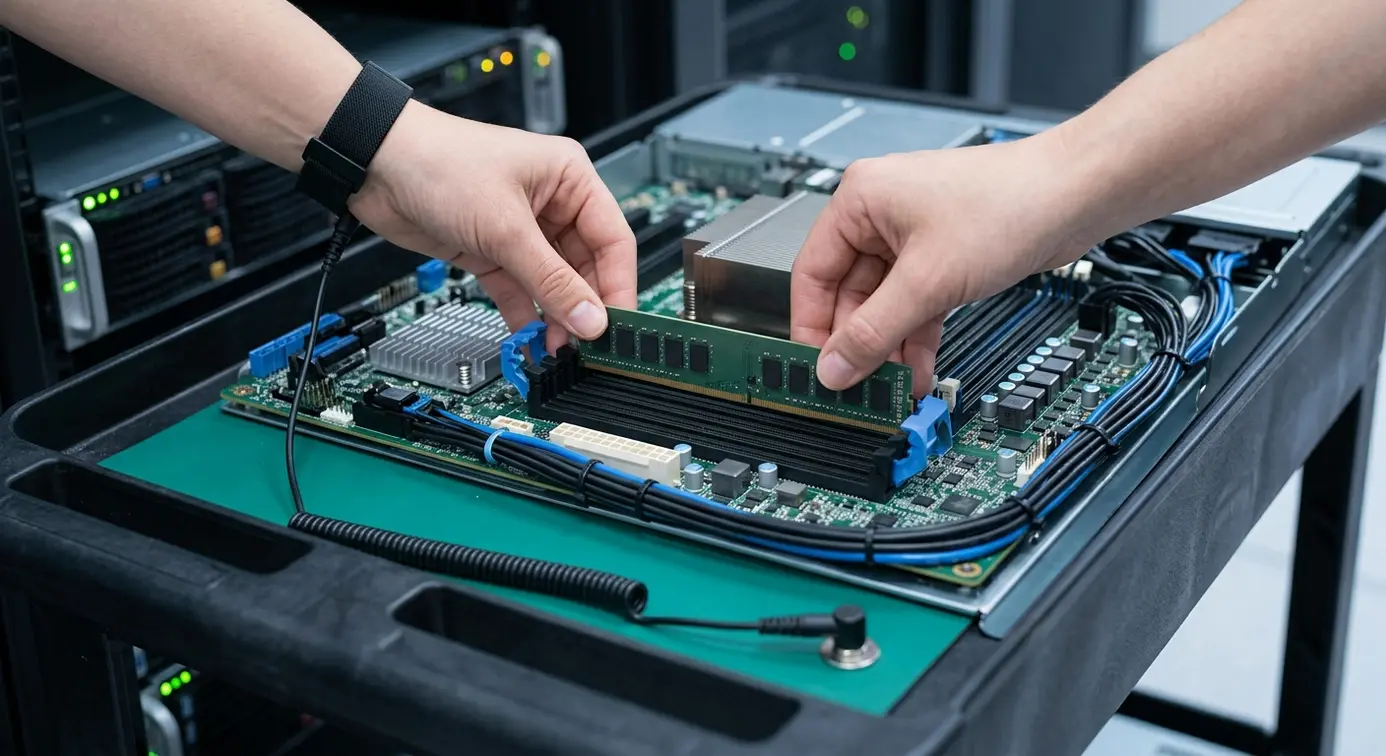
Work in ESD‑safe areas with grounded benches, flooring and wrist straps. Power down, discharge, then record slot maps and take photos. Use ejector levers; avoid flexing the PCB or scuffing heat spreaders.
Capture labels and SPDs: scan PN, brand, date code, speed, rank and capacity. Build tamper‑evident lots and maintain chain of custody. DRAM is volatile, but treat complete nodes within an ITAD process to keep a clear audit trail.
Testing Workflows That Catch Faults Early
Start with visual/AOI checks for bent contacts, delamination and rework. Read and verify SPD: JEDEC fields, vendor IDs, timing tables, and DDR5 PMIC telemetry.
Run functional tests (Memtest‑style and March patterns), then multi‑hour burn‑in at operating temperatures with channel interleave. Margin test at rated speed and one bin up/down. Record results per module and lot with serial tie‑back.
This image was generated with AI and may not always represent the product or service exactly.
Grading, Set‑Building, and Documentation
Grade A: full pass, clean cosmetics. Grade B: full pass, minor marks. Grade C: down‑binned or intermittent; not for enterprise. Clear cosmetic descriptions reduce returns and speed acceptance.
Build matched 8/12/16‑DIMM sets by brand, speed, rank and date code. Label trays with PN, speed, rank, voltage, test date and warranty. Provide yield sheets, failure codes and photos so sellers and buyers know exactly what shipped.
Packaging and Shipping That Prevents Transit Failures
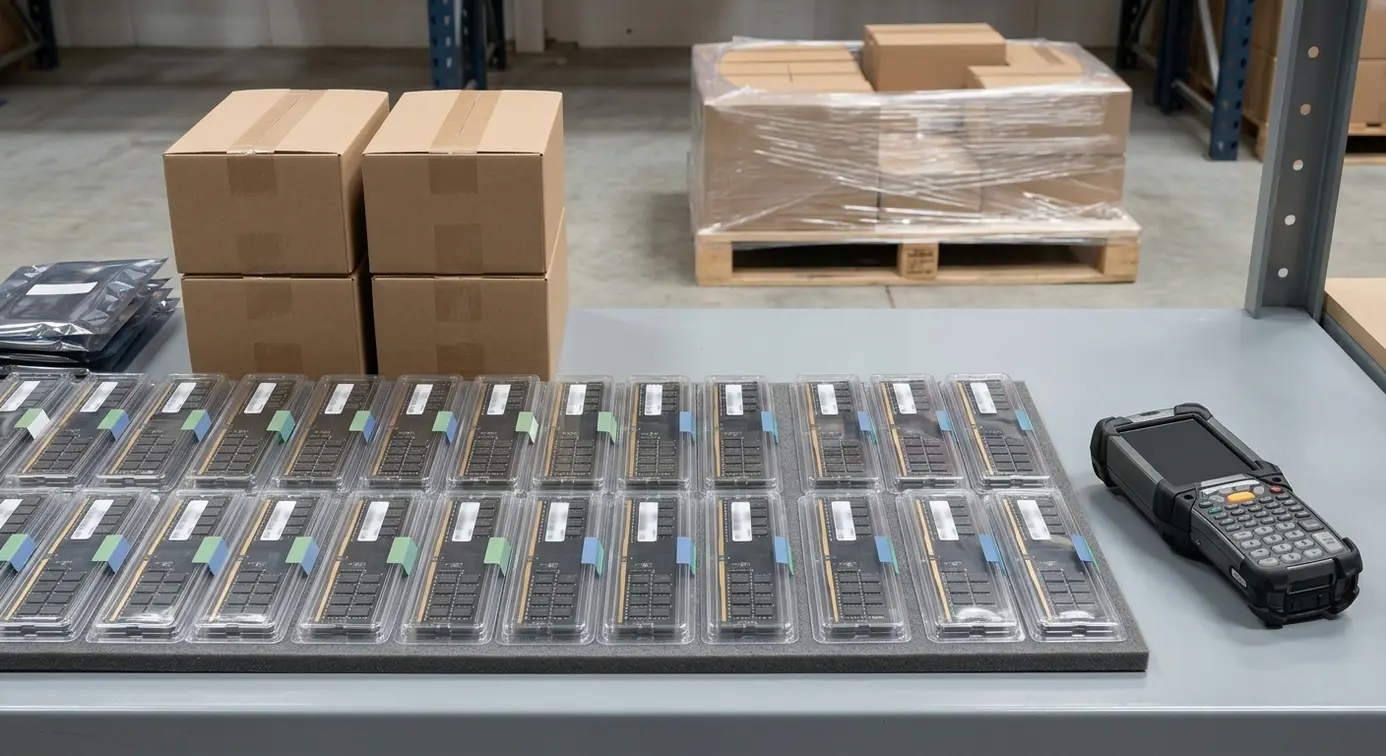
Use JEDEC trays/tubes or dense ESD foam in anti‑static bags. Add desiccant and humidity cards for long routes. Avoid loose bulk packing that causes edge damage and bent contacts.
Use crush protection, double‑wall cartons and corner guards; palletise flat to prevent bowing. Include packing lists, test certificates and barcodes. Ship on insured, tracked services with shock/tilt indicators, and state warranty and RMA steps on the paperwork.
Pricing and Remarketing: How to Win Both Sides
Price by density, speed bin, rank, brand, test yield and the current spot. Set firm floors on scarce SKUs; offer volume tiers and keep a 2–5% RMA reserve to protect margins. Update offers weekly when RFQ tone changes.
Choose channels per part: direct enterprise for matched sets, brokers for speed, marketplaces for long tail, and consignment for rare modules. Publish clear warranties (e.g., 12 months enterprise, DOA on arrival). Need a buyback? Send your list for a same‑day indicative and a 24‑hour firm quote.
Compatibility and Installation Tips That Avoid Downtime
Do not mix RDIMM with LRDIMM. Keep ranks and capacities consistent per channel. Match speed to the CPU IMC and populate channels evenly for bandwidth. Update BIOS/firmware, especially for DDR5 PMIC stability.
Examples: EPYC Milan with DDR4‑3200 2Rx4 32/64GB; EPYC Genoa with DDR5‑4800/5600 64/96GB; Intel Sapphire Rapids similar. After install, run a short burn‑in before putting nodes into production.
Sustainability, Compliance, and Risk Management
Look for ISO 9001/14001, WEEE handling, secure transport, tamper seals and full audit trails. These controls reduce risk and improve yield and resale value.
Reuse beats recycle on cost and carbon. Properly tested and warranted modules extend asset life and cut Scope 3 emissions, while maintaining reliability in production environments.
How Equipment HQ Supports Your Memory Buyback and Supply
Equipment HQ delivers same‑day indicative and 24‑hour firm quotes, fair grading, certified engineers, clean‑room handling and full test reports. Stock is ready to ship with clear warranties and rapid dispatch across the UK and EU.
We offer direct purchase, revenue share or consignment. Send your lot list to start. For end‑to‑end decommission and resale, we align recovery, testing, documentation and logistics under one accountable team.
FAQs
Is DDR4 still worth buying for AI in 2026?
Yes. For CPU‑heavy inference, storage and virtualisation, DDR4 offers strong TCO and wide availability. It pairs well with EPYC Milan and Intel Ice Lake nodes.
Which DDR5 capacities hold the best resale value?
64GB and 96GB RDIMMs at 4800–6400 MT/s lead demand. 128GB, especially 3DS, also commands premiums when supplied as full matched sets.
How do you verify DDR5 module authenticity?
We inspect PCBs and labels, read SPD and PMIC telemetry, check JEDEC fields and vendor IDs, then run functional and burn‑in tests with serialised records.
Can I mix RDIMM and LRDIMM in the same server?
No. Mixing will prevent boot or cause instability. Keep RDIMM and LRDIMM separate and match ranks and capacities across channels.
What warranty do you provide on refurbished memory?
Typical cover is 12 months for enterprise use with DOA terms. We include test certificates and a simple RMA process.
How fast can Equipment HQ quote a buyback lot?
Same‑day indicative pricing and a firm quote within 24 hours in most cases, once we receive part lists and photos.