

Why Benchmarking Your Server Buy-Back Matters In 2026
The UK secondary server market in 2026 is priced around CPU generation, RAM density, NVMe capability, GPU readiness, rail kits, and any transferable warranty. These set the ceiling price. AI/analytics workloads keep demand high for GPU-capable, NVMe-heavy platforms, while DDR5 systems command a premium. Chip and storage supply swings can move prices quickly.
Benchmarking lets you compare like-for-like and avoid underpricing. If you are weighing options, see our guidance on timing and outcomes in Why you should sell your old business IT hardware and how we handle collection, testing and payment in ITAD services for businesses. Sell while your platform is in active demand; only repurpose if power, warranty and workload fit your roadmap.
Step 1: Build A Complete Asset Record
Buyers pay for certainty. Capture full details so the price stays firm after collection. Record identifiers, components, health, and clear photos.
- Identifiers: brand/model, service tag/serials
- CPU: model, generation, core count, installed sockets
- Memory: DIMM part numbers, type (RDIMM/LRDIMM, ECC), size per stick, total, slots used
- Storage: drive model, capacity, interface (NVMe/SAS/SATA), count, DWPD/TBW, SMART
- Controllers: RAID/HBA model, cache, battery/flash module
- Accelerators: GPU/FPGA part numbers, VRAM, power leads, risers, shrouds
- Networking: LOM/mezz/NIC speeds (10/25/40/100GbE), port counts, SFP+/QSFP types
- Power: PSU count, wattage, redundancy
- Chassis: rail kits, front bezels, OEM caddies and quantities
- Firmware/licences: iDRAC/iLO level and any transferable licences
- Warranty: status and transfer eligibility
- Health: error logs, lifecycle logs, SMART, fan/PSU counts
Photos: front and back, service tag, internals, rails, bezels and caddies laid out. For process support see ITAD services for businesses and pre‑sale checks in Server maintenance: what to know and where to start.
CPU Generation: The Primary Value Driver
Generation sets platform age and features. Map part numbers to families and I/O:
- Intel Xeon Scalable: Ice Lake (PCIe 4.0, DDR4), Sapphire/Emerald Rapids (PCIe 5.0, DDR5)
- AMD EPYC: Rome (Zen 2), Milan (Zen 3), Genoa/Bergamo (Zen 4/Zen 4c, PCIe 5.0, DDR5)
Datasheets confirm PCIe lanes, AVX-512/AMX, memory type and max capacities.
- Tier 1: current gen (DDR5, PCIe 5.0)
- Tier 2: n-1 (late DDR4/PCIe 4.0 or early DDR5)
- Tier 3: legacy (older DDR4/PCIe 3.0)
Higher core counts and acceleration features lift value, but power efficiency and platform I/O matter. Plain-English tip: newer gen and more cores per socket usually raise price—if the platform’s power draw and features suit today’s workloads.
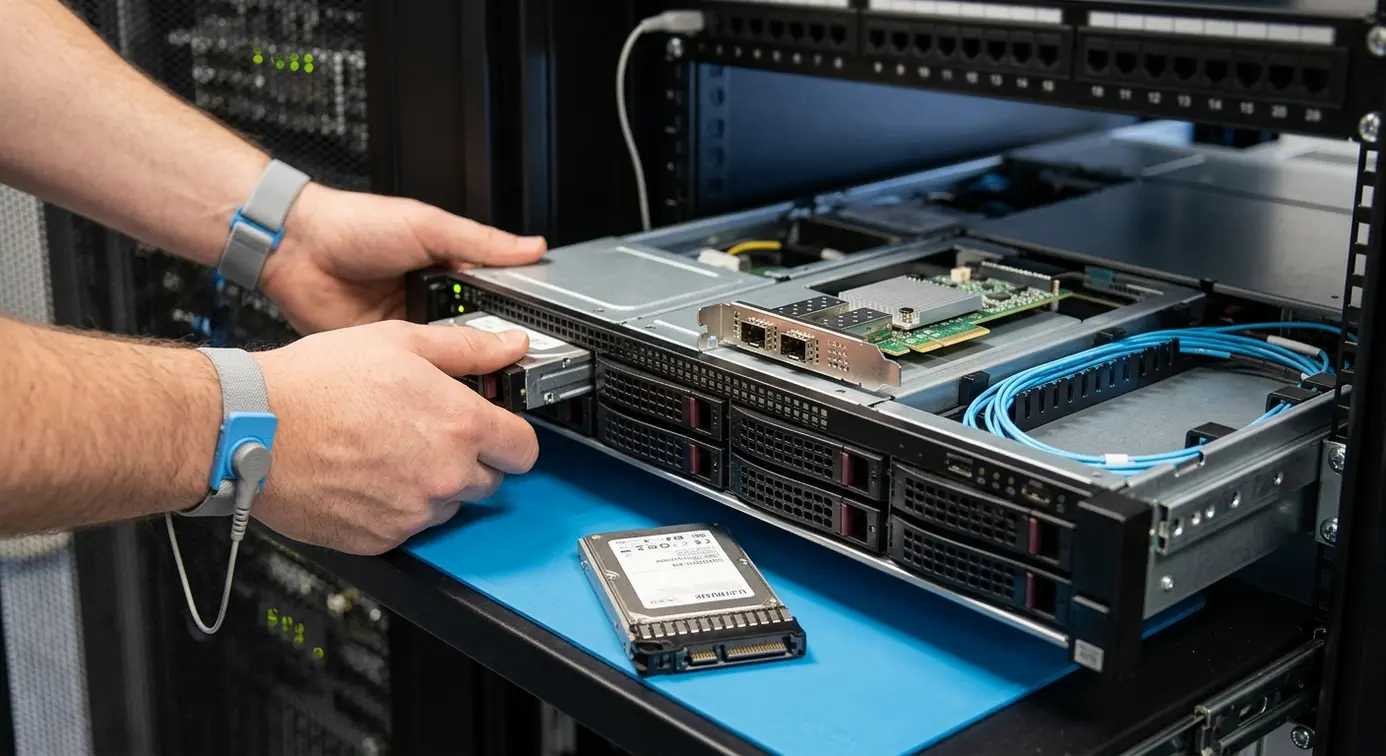
This image was generated with AI and may not always represent the product or service exactly.
Memory Density And Type: Where DDR5 Leads
DDR5 RDIMMs carry a premium. DDR4 remains liquid at the right densities. RDIMM vs LRDIMM affects compatibility and max capacity; ECC is standard.
- List exact DIMM part numbers for accurate pricing
- Value scales with density: 64/128/256 GB sticks outprice many small modules
- Populate memory channels optimally; most platforms prefer one or two DIMMs per channel
- Even low-value chassis may contain high-value, tested, branded DIMMs—do not omit them
Storage Configuration: NVMe Backplanes And PCIe Generations
NVMe is PCIe-attached; SAS/SATA require controllers. Native U.2/U.3 NVMe backplanes—ideally PCIe 4.0 or 5.0—add clear resale value. Mixed-bay chassis must be described precisely.
- Detail backplane type, bay count, bifurcation/switch cards, and PCIe generation
- Record each drive’s model, capacity, interface, endurance (DWPD/TBW), and SMART health
- Matched capacities with OEM caddies price better; missing caddies or failed SMART trigger deductions
- Rule of thumb: NVMe plus healthy enterprise SSDs increases buy‑back value
See secure sanitisation options in IT hardware disposal options explained.
GPU And Accelerator Cards: The 2026 Wild Card
NVIDIA A/L/H‑series, AMD Instinct MI and other accelerators can eclipse base server value.
- Capture exact GPU part numbers, VRAM, cooling type (passive/active), risers/shrouds and aux power leads
- Confirm GPU‑ready chassis: high‑airflow fans, correct risers, adequate PSUs
- Provide test results and provenance to prevent downgrades at inspection
For professional handling and audited workflows, see ITAD services for businesses.
Chassis Extras That Move The Needle: Rails, Bezels, Caddies And PSUs
- Complete OEM rail kits add value; missing rails usually incur fixed deductions
- Front bezels, full sets of OEM caddies and dual hot‑swap PSUs (adequate wattage) improve pricing
- List mezz/LOM NICs (10/25/40/100GbE), SFP+/QSFP transceivers and advanced RAID/HBA cards
- iDRAC/iLO licence transferability varies—state what is included
- Photograph rails, bezels, caddies, NICs, RAID cards, power cords and adapters with quantities
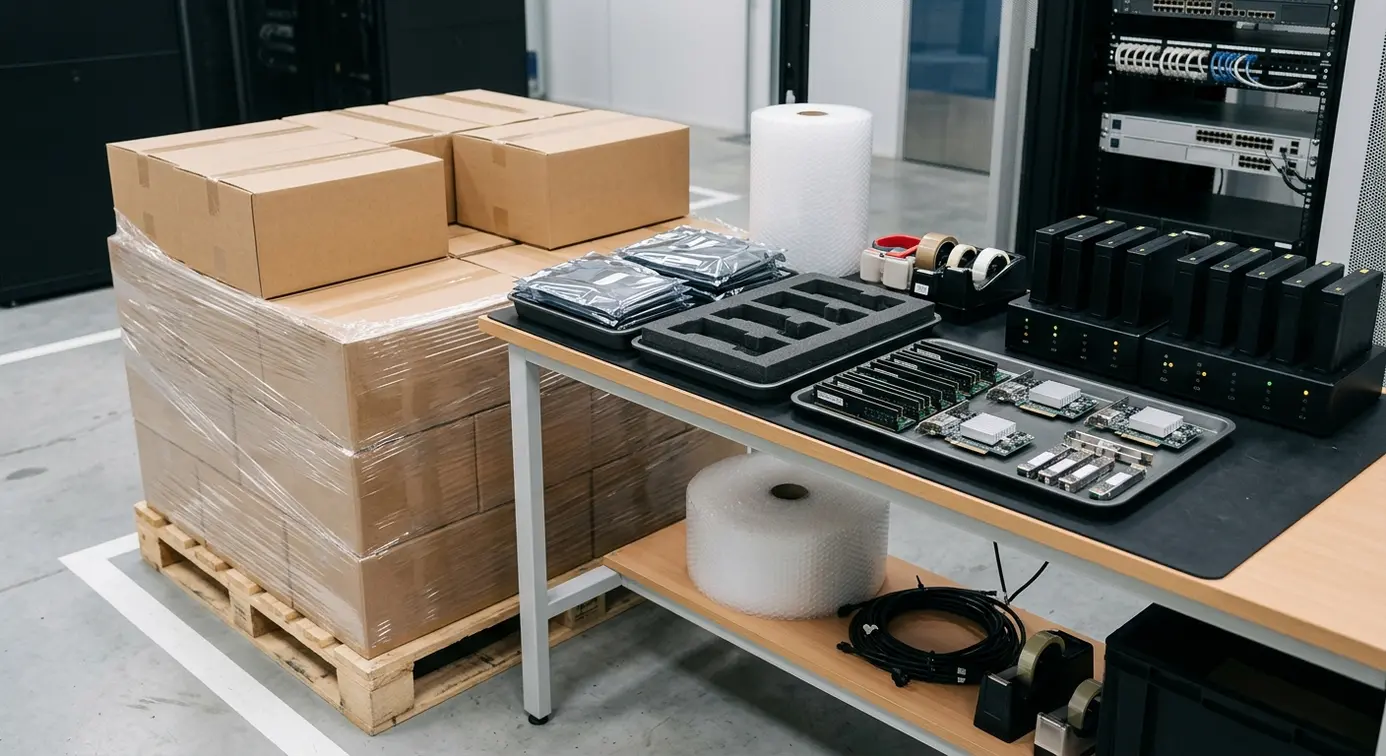
This image was generated with AI and may not always represent the product or service exactly.
Warranty, Condition And Testing Evidence
Transferable OEM cover increases confidence and price. Check vendor portals for transfer eligibility. Without warranty, strong test evidence is essential.
- Export lifecycle controller/iDRAC/iLO logs, SMART data and any PSU/fan error counts
- Provide an A/B/C cosmetic grade with clear photos
- Include a short boot or stress‑test video note if possible
The clearer your evidence, the firmer your final offer.
A Practical Valuation Framework With Weights
Use a repeatable scorecard so quotes are comparable. Suggested weights:
- CPU: 30%
- RAM: 20%
- Storage/NVMe: 20%
- GPU: 20% (set to 0% if none)
- Chassis extras: 5%
- Warranty/condition: 5%
Ask for line‑item pricing and explicit deductions (e.g., missing rails, failed drives, palletising, wipe fees).
Example: Offer A — CPU £1,200; RAM £600; Storage £500; GPU £0; Extras £80; Warranty £50; minus £50 (missing rails) = £2,380. Offer B — £1,100 + £700 + £550 + £0 + £0 + £0; no deductions = £2,350. On weighted scores and transparency, Offer A wins.
Red Flags And Negotiation Tips
- Watch for vague “subject to testing” or “grade on arrival” clauses
- Get a pre‑pickup test plan, acceptance criteria and maximum deductions in writing
- Confirm logistics: who supplies packaging, pallet count, lift access, and any charges
- Insist on certified data wiping with serial‑matched reports and clear chain‑of‑custody
For risk controls and practical checks, see How to avoid security issues when recycling network hardware. If terms are unclear, pause and get them clarified before collection.
Compliance, Secure Data Wiping And Environmental Outcomes
Your duties under GDPR and WEEE are non‑negotiable. Acceptable erasure standards include NIST 800‑88 and vendor‑certified tools such as Blancco, with serialised reports. Where reuse is safe, it beats recycling; if recycling is required, insist on compliant downstream tracking.
- State whether you require on‑site wipe, off‑site erase, or physical destruction for non‑wipeable media
- Retain data protection and downstream recycling evidence for audit
For legal and policy guidance, see GDPR compliance.
Your RFQ Template: What To Send To Buyers
Send a concise brief so buyers can price firmly:
- Asset list with serials and detailed specs (CPU/RAM/drive/GPU/NIC/RAID)
- Health logs and SMART exports; photos (front/back/internals, rails, bezels, caddies)
- Required erasure standard and reporting format
- Site address, access notes, pallet count, and who supplies packaging
- Target collection dates and any time restrictions
- Payment terms, acceptance criteria, dispute window, proof‑of‑destruction needs
- Attach your valuation scorecard and request line‑item offers
If you want turnkey handling and rapid payment, see ITAD services for businesses or browse the latest guidance on the blog.
Why Work With Equipment HQ
Equipment HQ provides certified engineers, multi‑brand expertise and audited workflows. We collect quickly, test thoroughly, wipe data to recognised standards, and pay promptly. You receive serialised reports and clear communication throughout.
Our refurbished parts carry warranties and our quotes are fair and transparent. For an engineering‑led buy‑back benchmarked on facts, request a quote from Equipment HQ.
FAQs
How do I verify my CPU generation quickly?
Check the service tag in the vendor portal or read the CPU model in the BIOS/management controller, then map it to the family (e.g., Milan, Genoa; Ice Lake, Sapphire/Emerald Rapids).
Do missing rails really affect price?
Yes. Complete OEM rail kits reduce installation cost and risk for buyers and typically add value. Missing rails often lead to fixed deductions.
What proof do I need for data erasure?
Serialised certificates referencing each drive, the erasure method (e.g., NIST 800‑88), pass/fail results, and the operator ID with timestamp.
Is it better to sell with or without GPUs installed?
If the chassis is GPU‑ready and the cards are high‑demand SKUs with provenance and tests, bundle them. Otherwise, request a split price for cards and chassis.
How are mixed drive capacities priced?
Mixed capacities reduce array utility. Buyers often price to the smallest common set and deduct for odd sizes or missing caddies.
Can I improve price with quick maintenance?
Yes. Update firmware, clear dust, replace failed fans and export clean health logs. Small fixes improve grading and reduce post‑collection downgrades.
When should I choose on‑site wiping?
Use on‑site wiping when data sensitivity is high or drives cannot leave the premises un‑erased. Ensure chain‑of‑custody is documented end‑to‑end.